


As electric vehicles (EVs) become increasingly popular, understanding how to maintain battery health is crucial for ensuring their long-term performance. The battery is the heart of every EV, responsible for storing and delivering the energy needed to drive the motor. Just as a traditional engine requires regular maintenance, the battery also needs continuous monitoring to ensure safe, reliable, and efficient operation.
EV battery health checks allow owners to monitor the battery's charge retention and discharge performance compared to when it was brand new. This process helps identify potential battery degradation issues and optimize charging habits, thereby preserving the vehicle's range and performance over the long term. Given that replacing a battery pack can be quite expensive, regular testing is a wise move to protect your investment and reduce the total cost of ownership.
Understanding Battery Health
Battery health refers to the battery's ability to store and efficiently release energy as it ages. In electric vehicles, this metric is typically measured by the State of Health (SOH), which reflects the battery's current remaining capacity compared to its original capacity when new. If a battery has an SOH of 90%, it means the battery can still retain 90% of its initial energy storage capability.
As the battery ages, its ability to store and release energy gradually declines. This performance degradation leads to reduced driving range and longer charging times, directly impacting the vehicle's performance and usability. When the State of Health (SOH) drops below 70%-80%, it is considered significantly degraded and may require further evaluation.
There are many factors that affect battery performance, including temperature, usage patterns, and charging speed. As the battery ages, the efficiency of the chemical reactions inside the lithium-ion cells gradually decreases. The electrodes slowly wear down, and internal resistance increases, reducing the battery's ability to deliver power when needed. Extreme high temperatures accelerate battery degradation, while low temperatures may temporarily reduce the vehicle's range.
Main Causes of Battery Degradation
- Thermal Stress: High temperatures accelerate the decomposition of electrolyte and electrode materials.
- Deep Discharge: Regularly draining the battery to 0% shortens the lifespan of the EV battery.
- Frequent Fast Charging: Increases heat generation and chemical wear.
- Extreme Temperatures: Both cold and hot environments affect battery performance.
- Poor Thermal Management: Insufficient cooling can lead to uneven battery temperatures.
These factors can vary depending on the manufacturer, vehicle model, and usage environment. For example, Tesla Model series vehicles utilize advanced thermal management technology to minimize battery degradation, thereby extending the lifespan of the battery pack.
EV Battery Lifespan and Performance
On average, an electric vehicle battery can retain about 80% of its original capacity after 7 to 10 years of use or approximately 100,000 to 200,000 miles of driving. This figure depends on various factors such as climate, driving conditions, and charging habits. Most manufacturers offer a warranty of 8 years or 100,000 miles, typically guaranteeing that the battery capacity will remain above 70% during this period. Within this timeframe, the EV battery's capacity will lose about 20%.
Evaluating battery capacity is essential for understanding the overall health and lifespan of an EV battery. Factors such as age, usage, and environmental conditions can lead to performance degradation, affecting the vehicle's range and driving dynamics.
Different battery chemistries also impact battery life. While most EVs use lithium-ion batteries with high energy density, newer models are beginning to use Lithium Iron Phosphate (LFP) batteries. These batteries are more stable at high temperatures and age more slowly, thereby improving overall battery life.
A well-maintained battery helps drivers maintain stable range, faster charging times, and better overall performance throughout the vehicle's lifespan.
How to Perform an EV Battery Health Check
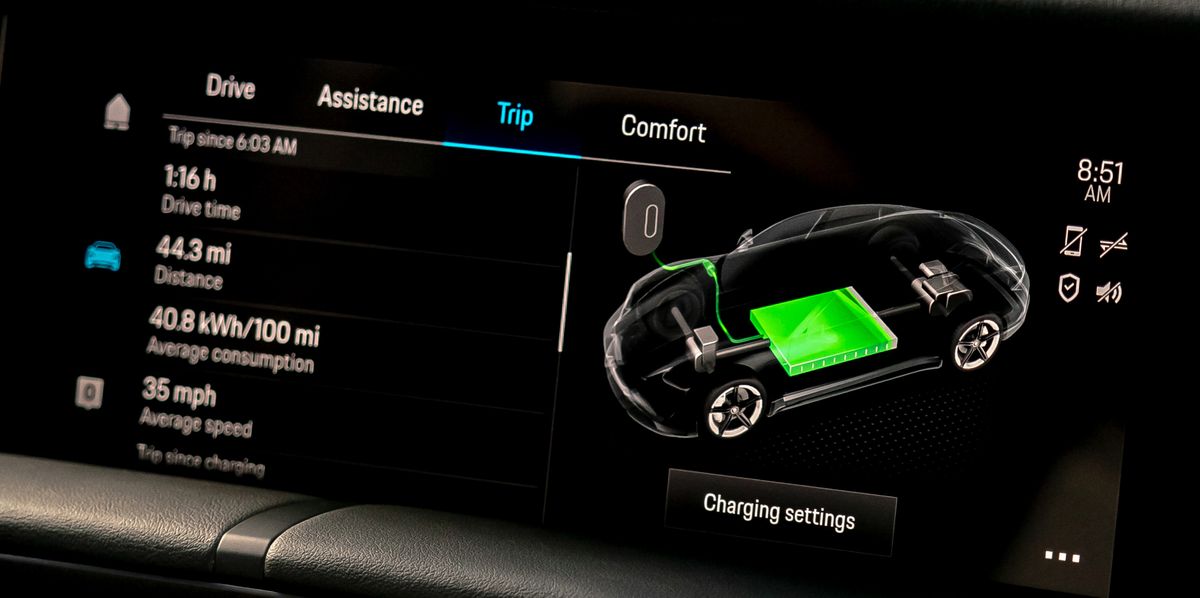
You can perform an EV battery health check using the car's built-in diagnostic functions, an OBD-II scanner, or by scheduling a professional inspection. This process helps you assess the battery's State of Health, measure the SOH, and detect signs of battery aging early on. Many EVs also allow you to view battery health via the onboard diagnostic system or infotainment system, which display metrics such as range and battery capacity.
Basic Checks
- Compare Actual vs. Estimated Range: Fully charge your EV to 100%, then drive until the battery is nearly depleted, and compare the actual distance traveled with the vehicle's estimated range. A healthy battery should perform very close to the estimate.
- Take a Test Drive: Drive a fixed distance under normal driving conditions to see if the range decreases proportionally.
- Review Charging Habits: Frequent use of fast charging accelerates wear. Try to minimize fast charging and opt for slow charging whenever possible.
- Check for Software Updates: Keeping your EV software up to date ensures accurate battery readings and efficient thermal management.
Intermediate Checks
- Use Diagnostic Tools: Plug an OBD-II scanner into the vehicle's diagnostic port to access Battery Management System (BMS) data. Apps like LeafSpy, TeslaFi, or Recurrent Reports can provide detailed information on battery capacity, temperature, and State of Health (SOH).
- Analyze Battery Data: Compare the change in State of Charge (SoC) with the energy added during charging. If the two do not match, it may indicate decreased battery capacity or increased internal resistance.
- Conduct a Capacity Test: Fully charge and discharge the battery, then compare the total energy discharged with the manufacturer's rated capacity.
Advanced Checks
- Professional Diagnostic Testing: Dealerships can perform advanced testing on battery cells to identify weak modules or voltage imbalance issues.
- Thermal Imaging: Professional tools can detect hot spots, which indicate uneven heating or potential thermal stress.
- Impedance and Capacity Analysis: Techniques such as Electrochemical Impedance Spectroscopy (EIS) or Incremental Capacity Analysis (ICA) can measure internal resistance and detect early signs of degradation.
These tests help you detect manufacturing defects, cell-to-cell imbalances, or other conditions affecting battery performance. Authorized dealers can use professional tools to provide advanced diagnostics and detailed battery health reports.
Monitoring Battery Health Over Time
Regular monitoring is essential for maintaining battery health. Modern EVs are equipped with telematics and onboard systems that track key performance data in real-time, such as charge cycles, energy consumption, and battery temperature. Syncing this data with smart charging software helps prevent deep discharge, avoid overcharging, and ensure optimal operation of the battery system.
Recommended Monitoring Practices
- Perform a capacity test annually to track changes in remaining capacity.
- Use apps or the car's native display to check health status and charging speed.
- Set up alerts for extreme temperatures or overheating events.
- For fleet owners, integrate a charging management system to track vehicle usage and prevent overcharging.
Monitoring these parameters helps detect premature battery degradation early, ensuring sustained battery performance and efficiency.
Optimizing Battery Performance and Lifespan
Proper care and good usage habits can maximize battery life and keep your EV battery performing at its best.
Best Practices
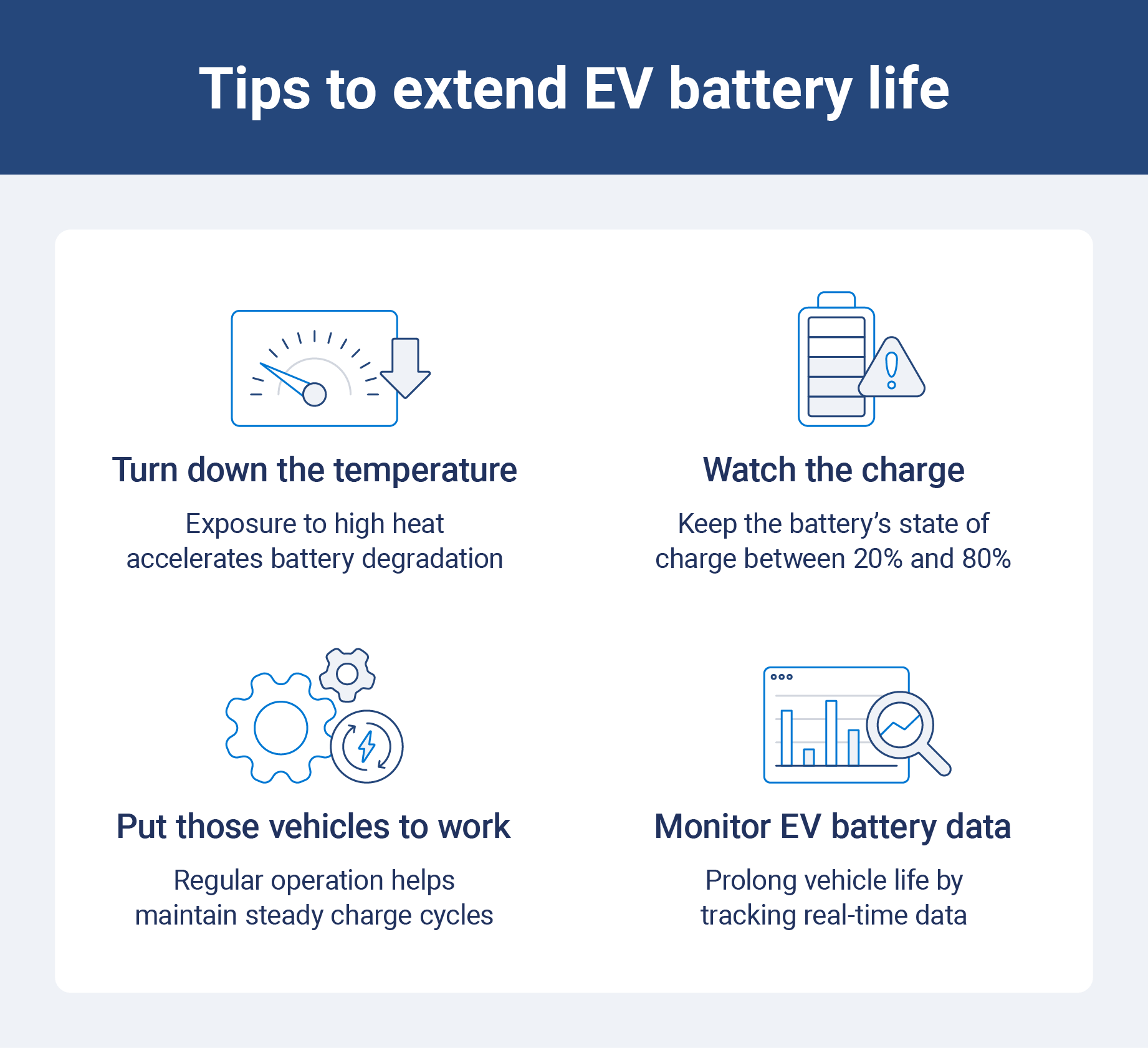
- Avoid Overcharging: Keep daily charging between 20% and 80% to prevent excessive stress on the battery cells.
- Limit Fast Charging: Reserve it for long trips to minimize thermal stress.
- Charge in Cool Conditions: Charging in high heat can trigger chemical reactions that accelerate battery aging.
- Drive Efficiently: Gentle acceleration and regenerative braking reduce discharge cycles, saving energy.
- Avoid Extreme Temperatures: Park your vehicle in shaded or insulated areas to protect the battery pack.
- Update Software Regularly: Ensure optimal thermal management and power distribution.
Smart Charging Tips
- Scheduled Charging: Take advantage of off-peak hours to charge, reducing energy costs and preventing overheating.
- Use Approved Chargers: Always use manufacturer-approved equipment to ensure stable current and proper voltage regulation.
- Balance Energy Usage: Distribute charging sessions evenly to prevent certain cells from aging faster than others.
Following these practices helps extend the life of your EV battery and maintain reliable performance.

Battery Range, Warranty, and Replacement
Understanding battery warranty terms can help owners avoid unexpected repair costs. Most manufacturers offer a warranty period of 8 years or up to 100,000 miles. Typically, warranty terms guarantee that the battery capacity will remain above 70% during the warranty period.
- Track Health Reports: Keeping records of battery health helps support warranty claims.
- Warranty Thresholds: Replacement is usually triggered when the State of Health drops below 70%.
- Professional Inspection: Dealers use authorized diagnostic tools to assess the integrity of the battery system.
Keeping accurate maintenance records not only helps with warranty service but also boosts the resale value for second-hand EV buyers.
Advanced Battery Technology and Management
Innovations in battery technology continue to improve battery lifespan and efficiency. Advanced thermal management systems, cell balancing technologies, and better-performing lithium-ion batteries are extending the usable life of EV batteries. Battery testing helps build trust in lithium-ion technology, which is crucial for the continued development of electric vehicles.
Examples of Innovation
- LFP Chemistry: Offers better heat resistance and slower capacity decay.
- Active Battery Balancing: Keeps individual cell voltages consistent.
- Improved Cooling Systems: Regulates battery temperature to prevent overheating.
- Smart Charging Algorithms: Adjusts charging speed based on battery status and ambient temperature.
These technologies ensure slower battery degradation, supporting the long-term adoption and sustainability of electric vehicles.
EV Battery Maintenance Tips
Properly maintaining your EV battery ensures lasting performance, stable range, and safety. Please follow these recommendations to maximize battery life:
- Charge Regularly, but Avoid 100%: Frequent full charges can stress the battery. Keep daily charging between 20% and 80% whenever possible.
- Limit Fast Charging: Use fast chargers only when necessary to reduce heat and chemical wear.
- Maintain Proper Temperature: Park in shaded or insulated areas to protect the battery from extreme cold or heat.
- Perform Regular Battery Health Checks: Monitor State of Health and capacity via the onboard system, apps, or professional diagnostic tools.
- Store at Partial Charge: If you won't be driving for several weeks, keep the battery level at around 50% to prevent performance decline.
- Follow Manufacturer Recommendations: Apply software updates promptly to optimize thermal management, charging algorithms, and battery performance.
FAQ
Q: How do off-grid systems perform during prolonged cloudy periods?
A: Plug the scanner into your car's port and use apps like LeafSpy or TeslaFi to view the battery's State of Health, capacity, and temperature.
Q: How can I perform an EV battery health check at home?
A: Check the difference between actual and estimated range, monitor your charging habits, and access battery data through the car's display or relevant apps.
Q: Where can I find EV battery health check services nearby?
A: Please visit authorized dealers, certified EV service centers, or mobile EV diagnostic specialists.
The transition to electric mobility is an irreversible trend, and robust infrastructure is the cornerstone supporting this shift. At Wenzhou Chuhan Technology, we are proud to be a Tier-1 integrator and source manufacturer in the new energy sector.
Whether you are an operator, distributor, or individual buyer, and whether you require highly reliable EV Chargers, efficient Solar Inverters, or durable Energy Storage Systems, we provide highly competitive hardware and customized solutions tailored to your needs.
Contact us today to get our latest product catalog and an exclusive quote. Let's empower global sustainable transportation together
WhatsApp:
+86 173 6959 1971
sales07@chinachuhan.com



