

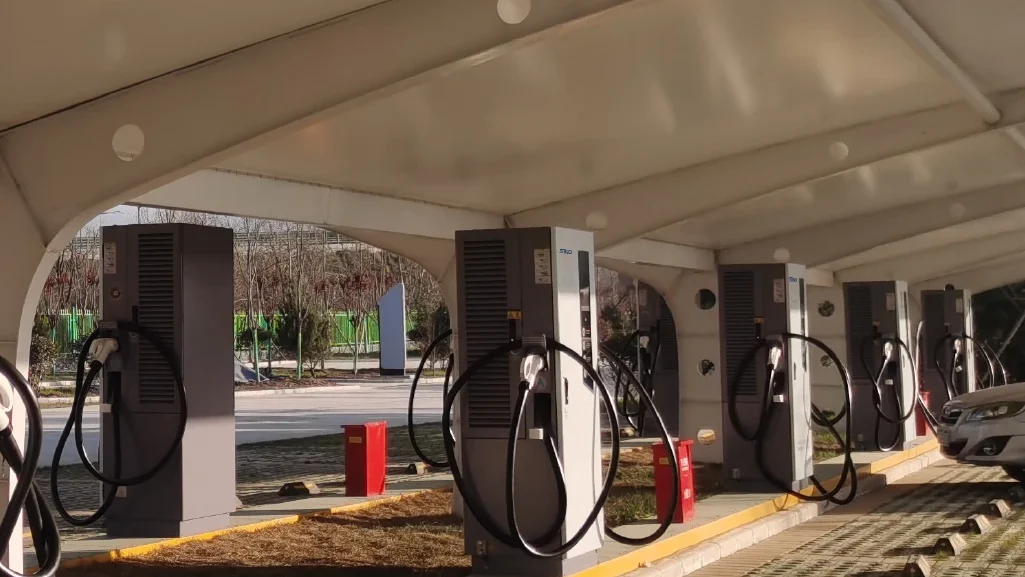
As electric vehicles (EVs) continue to gain popularity, charging technology is rapidly evolving to make ownership more convenient. While many EV drivers rely on home charging for their daily commute, long-distance travel requires a faster way to replenish the battery. That is where DC Fast Charging comes into play.
Unlike standard Alternating Current (AC) charging, DC Fast Charging can add a significant amount of range in a short period, making it an indispensable part of modern EV infrastructure. Whether you are planning a road trip or simply want to understand how the technology works, mastering these basics will help you make smarter charging decisions and prolong your battery's lifespan.
What is DC Fast Charging?
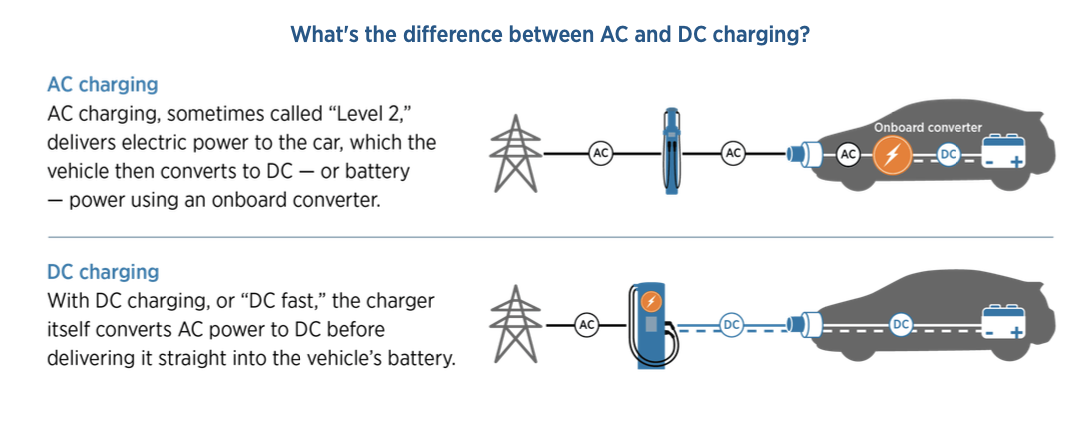
To understand DC Fast Charging, we first need to look at how it delivers power. It is a method that feeds Direct Current (DC) electricity directly into the vehicle's battery.
Unlike traditional AC charging-where the vehicle handles the power conversion-DC fast chargers convert AC to DC before the electricity enters the car. This allows the battery to receive much higher power levels, resulting in significantly faster charging speeds. Today, DC Fast Charging is the quickest and most widely used public charging option, commonly found along highways, at shopping centers, and in other public hubs.
AC Charging vs. DC Fast Charging
To understand why DC is faster, it helps to know the difference between AC and DC. The power grid supplies Alternating Current (AC). During standard AC charging, the vehicle's Onboard Charger is responsible for converting that AC power into the DC power the battery can store.
When using DC charging, however, the AC-to-DC conversion happens inside the charging station itself. By bypassing the onboard charger, the station can pump DC electricity directly into the battery, achieving speeds far beyond what traditional AC charging can offer.
How Does DC Fast Charging Work?
A DC fast charger draws AC power from the grid, converts it to DC, and delivers it straight to the battery. A typical session involves the following steps (note that actual performance depends on various variables, not just the charger's rated power):
- The vehicle is plugged into the charger.
- The charger and vehicle establish a digital "handshake" to communicate.
- The system checks the battery temperature, State of Charge (SoC), power demand, and environmental conditions.
- The charger determines the maximum safe power the battery can accept.
- DC power flows directly into the battery.
- The charging rate is dynamically adjusted in real-time based on the battery's condition.
Throughout this process, the charging station continuously monitors safety protocols to protect the battery and maintain efficiency.
How Much Power Can a DC Fast Charger Output?
One of the biggest advantages of DC Fast Charging is its high power output. Most stations range from 50 kW to 350 kW, with some ultra-fast systems pushing even higher. Generally, the higher the power output, the faster the potential charging speed.
However, performance isn't solely dependent on the charger. The EV itself must be capable of accepting high charging rates. A 350 kW charger won't automatically charge every car at 350 kW; the speed is limited by the vehicle's maximum receiving capacity and battery design.
Understanding the Charging Curve
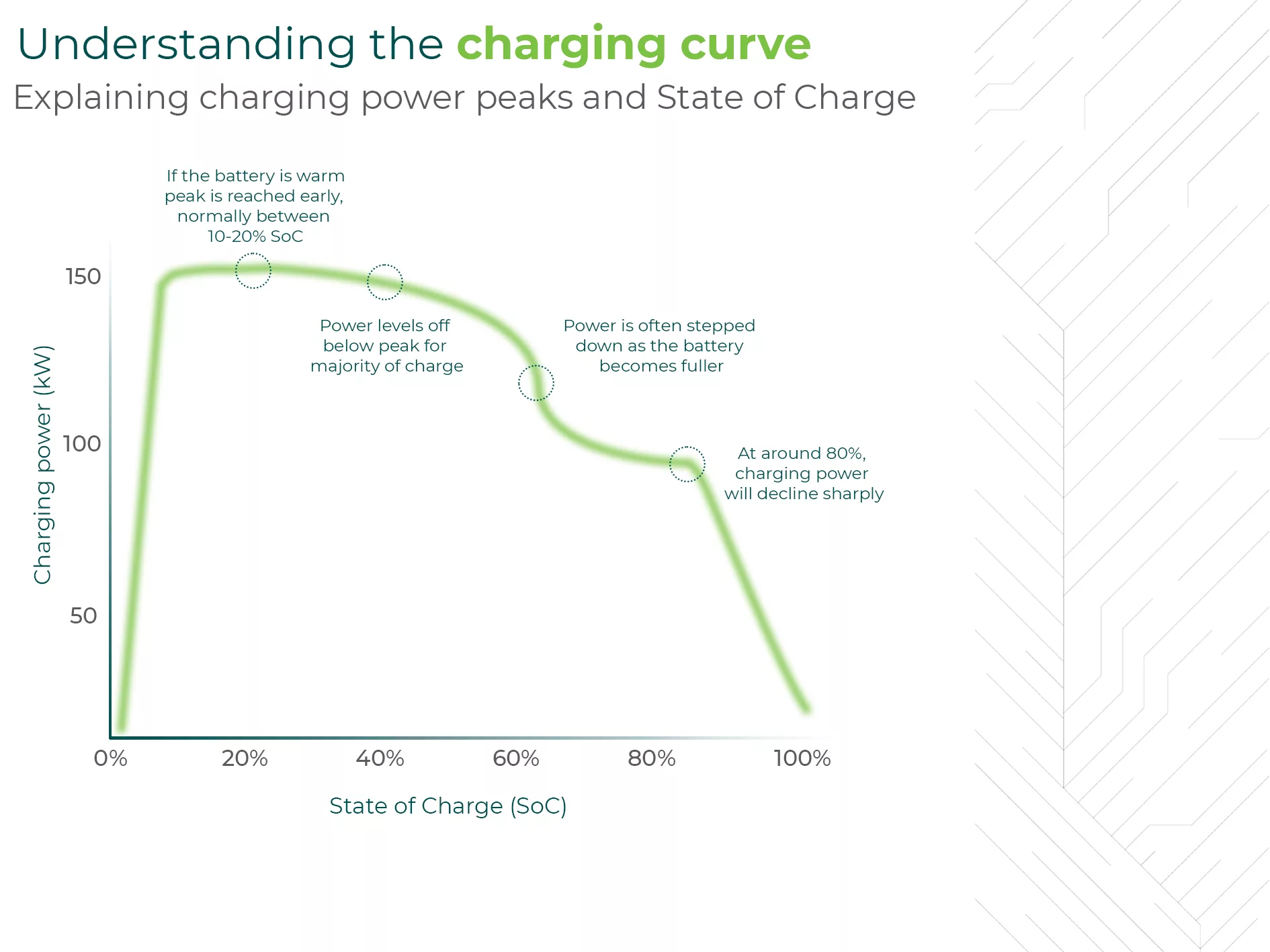
The Charging Curve plays a crucial role in determining total charging time. It is a graph showing how charging speed fluctuates as the battery fills up.
For most EVs, charging is fastest when the battery is between 20% and 80%. In this "sweet spot," the vehicle can typically accept its maximum power. As the battery approaches full capacity, the charging power gradually tapers off (battery temperature and other factors also influence this drop-off). This power reduction helps protect battery health and prevents overheating. Because of this, many EV owners prefer to unplug at around 80% rather than waiting for a full 100% charge.
DC Fast Charging vs. Level 1 & Level 2 Charging
- Level 1 Charging: Uses a standard household outlet. It is the slowest method, best for topping off.
- Level 2 Charging: Uses a 240-volt connection, commonly installed in homes. An overnight session usually adds enough range for daily driving.
- DC Fast Charging: Significantly faster than both options above.
Typical Performance Comparison:
- Level 1: Adds 3–5 miles of range per hour.
- Level 2: Adds 10–40 miles of range per hour.
- DC Fast Charging: Adds 100–240+ miles of range per hour.
While most owners rely on AC for daily use, DC Fast Charging is the undisputed champion for road trips.

How to Find and Use DC Fast Chargers
DC fast chargers are strategically located along major highways, in city centers, and near commercial districts. Many EV charging apps allow you to filter stations by:
- Connector type
- Charging network
- Power output
- Real-time availability
Standard Steps for Use:
- Park in the designated charging spot.
- Select the correct connector for your vehicle.
- Plug the charger into your vehicle's port.
- Initiate the session via the screen or mobile app.
- Monitor the progress.
- Once finished, unplug and return the cable to the holster.
Being courteous and moving your car once charged ensures everyone gets a turn.
How Much Does DC Fast Charging Cost?
DC Fast Charging is generally more expensive than home charging. Rates vary by network, local electricity prices, and location. Most networks charge per kilowatt-hour (kWh), typically ranging from $0.25 to $0.60 per kWh, though prices fluctuate based on region and time of day.
These higher costs reflect the expensive infrastructure required to install and operate high-power electrical equipment.
When Should You Use DC Fast Charging?
DC Fast Charging is most practical when time is of the essence:
- Cross-city or long-distance travel.
- Road trips.
- Quick top-ups between destinations.
- For drivers who do not have access to home charging.
Will DC Fast Charging Damage My Battery?
A common concern is whether frequent fast charging degrades battery health. High-power charging generates more heat than slow charging, and excessive heat can accelerate long-term degradation.
However, modern EV batteries are equipped with advanced Battery Management Systems (BMS) that actively regulate temperature and charging speeds to protect the cells. For the average driver, occasional fast charging is unlikely to cause significant harm.
Tips for Maximizing Battery Life:
- Use DC Fast Charging only when necessary; don't rely on it exclusively.
- Stick to the 20%–80% rule whenever possible.
- Avoid back-to-back fast charging in extreme temperatures.
- Monitor battery temperature during long trips if your vehicle provides that data.
- Follow the manufacturer's guidelines for optimal charging habits.
Conclusion
DC Fast Charging has revolutionized the EV experience by making long-distance travel a reality. By delivering DC power directly to the battery, these systems offer speeds that traditional AC charging simply cannot match.
By understanding charging speeds, curves, connector types, and battery health best practices, drivers can get the most out of their vehicles. Used strategically, DC Fast Charging keeps your EV ready for the road while preserving its long-term health.
FAQ
Q: What is DC Fast Charging?
A: It is a high-power charging method that uses Direct Current (DC) to charge an EV. By bypassing the onboard charger and feeding power directly to the battery, it drastically reduces charging times compared to AC charging.
Q: Is DC Fast Charging worth it?
A: Absolutely. When you need to juice up quickly-especially on road trips-it is invaluable. While it costs more than home charging and generates more heat, most owners use it strategically for travel and rely on AC for daily needs.
Q: What are the main advantages?
A: The primary benefit is speed. It minimizes downtime during travel and makes EV ownership practical for a much wider range of driving scenarios.
The transition to electric mobility is an irreversible trend, and robust infrastructure is the cornerstone supporting this shift. At Wenzhou Chuhan Technology, we are proud to be a Tier-1 integrator and source manufacturer in the new energy sector.
Whether you are an operator, distributor, or individual buyer, and whether you require highly reliable EV Chargers, efficient Solar Inverters, or durable Energy Storage Systems, we provide highly competitive hardware and customized solutions tailored to your needs.
Contact us today to get our latest product catalog and an exclusive quote. Let's empower global sustainable transportation together
WhatsApp:
+86 173 6959 1971
sales07@chinachuhan.com



