


When designing commercial or large residential solar systems, precisely matching your solar panel array to a hybrid inverter is critical to ensuring system efficiency, reliability, and long-term value. A carefully calculated and configured system not only maximizes energy output, but also lays a solid foundation for future expansion and grid interaction. As the "brain" of the entire solar-plus-storage system, the hybrid inverter's selection and sizing directly determine whether the system can operate stably and efficiently across all operating conditions.
Calculating Total Solar Panel Array Power
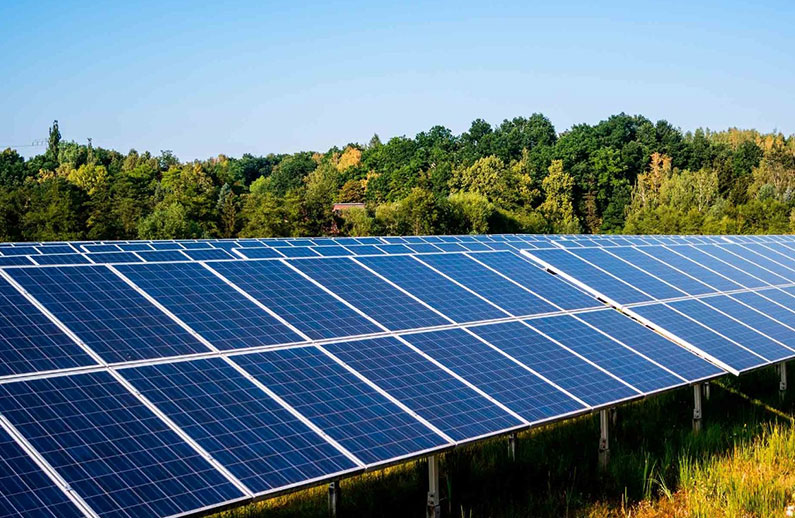
First, you need to determine the total power output of your solar panel array - the foundation for selecting an appropriately sized inverter. The standard calculation multiplies the rated power of each individual panel by the total number of panels.
Example: If you plan to install 20 solar panels each rated at 620W, your total array power will be: 620W × 20 = 12,400W (12.4kW)
Tip: Always use the panel's rated power under Standard Test Conditions (STC) for accurate calculations. STC ratings are measured under 1000W/m² irradiance, 25°C cell temperature, and AM1.5 air mass - the universal industry benchmark for apples-to-apples performance comparison.
| Component | Description |
|---|---|
| PV Array Power | Panel power (STC) × Number of panels |
| Average Peak Sun Hours | Annual average peak sunlight hours (typically 4.0–5.5 hours) |
| Efficiency Factor | Accounts for system losses; generally 75%, up to 80% for ideal installations |
| Daily Watt-Hours | PV array power (watts) × Sun hours × Efficiency factor |
Panel orientation and tilt angle are also critical to maximizing energy output. They should be optimized for the installation site's latitude, and shading must be minimized - even partial shading can cause disproportionate energy loss. In the Northern Hemisphere, panels should face true south; in the Southern Hemisphere, true north. The tilt angle is generally set close to the local latitude to maximize annual energy production. For sites with large seasonal differences in electricity use, adjustable-angle mounting systems can further boost efficiency: steepen the tilt in winter and flatten it in summer.
Sizing the Inverter Using the DC-to-AC Ratio
Once you have the total panel power, apply the DC-to-AC ratio to find the optimal inverter power rating. This ratio compares the DC power of the solar array to the AC rated power of the inverter.
International standards recommend a DC-to-AC ratio between 1.1 and 1.3 for most commercial solar systems. This range keeps the inverter running in its high-efficiency band for most of the day while making full use of available solar resources.
Example: A 12kW solar array paired with a 10kW hybrid inverter (12kW / 10kW = 1.2) is a well-balanced choice.
Tip: Modestly oversizing the DC side (raising the DC-to-AC ratio) helps the inverter hit peak power earlier in the day and compensates for gradual panel performance degradation over time. Solar panels typically degrade to roughly 80% of their initial output after 25 years. Building in a small oversizing margin at the design stage preserves strong energy production across the system's entire service life.
The Inverter Load Ratio (ILR) is a closely related concept. It is defined as the ratio of the array's nominal DC power to the inverter's rated AC output. A well-calibrated ILR keeps the inverter operating at peak efficiency for longer hours, lifting overall energy yield and extending equipment life. A slightly elevated ILR also captures more energy on cloudy days and in low light, while offsetting long-term panel degradation.
Matching Inverter Specifications to Your Panel Array
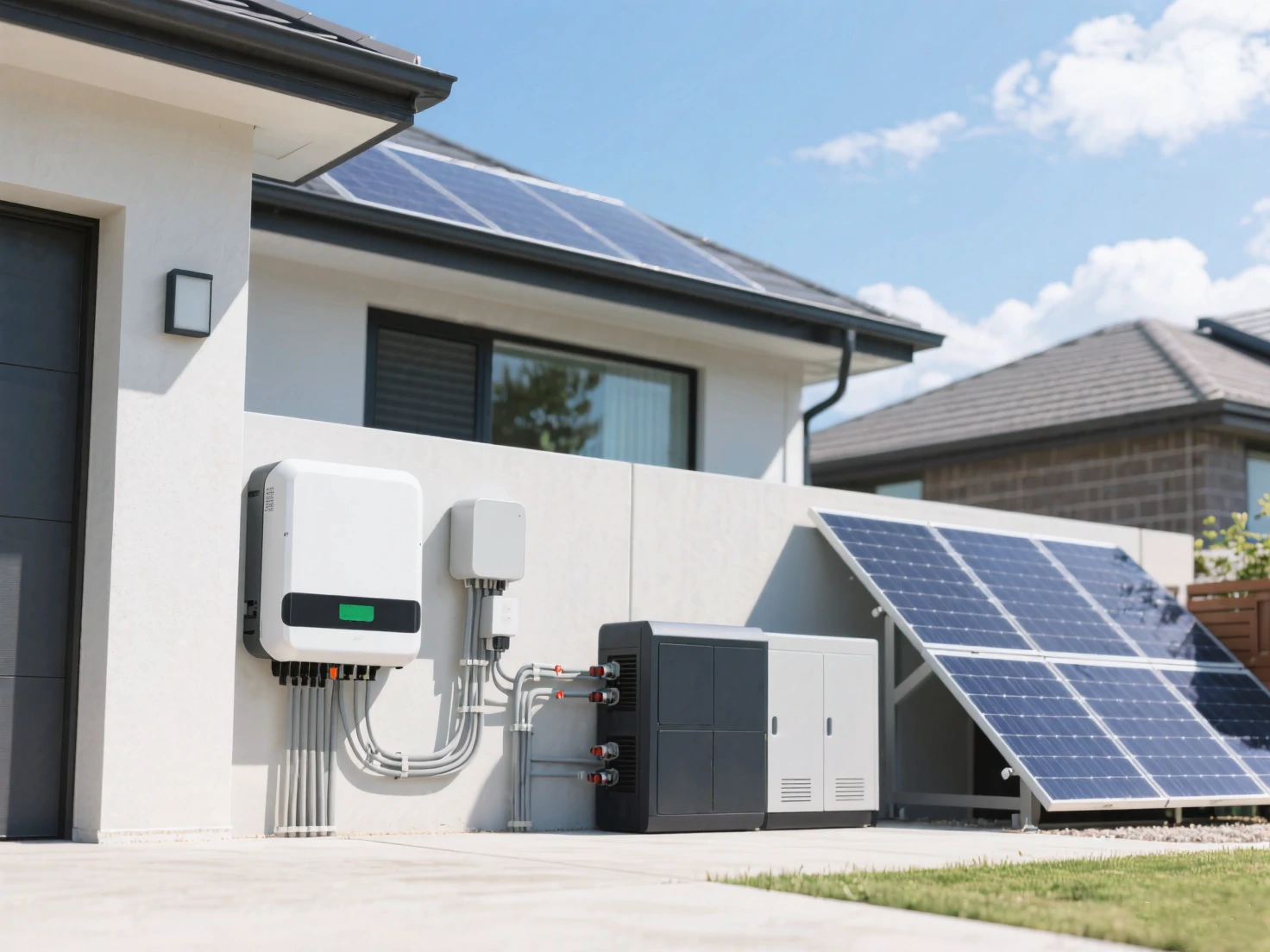
Full technical compatibility between your panel array and the chosen inverter is essential for safe, reliable, high-efficiency operation.
| Specification | Description |
|---|---|
| Voltage and Power Ratings | The total voltage of series-connected panels must fall within the inverter's MPPT operating voltage range. |
| Open-Circuit Voltage (Voc) | The total open-circuit voltage of series strings must never exceed the inverter's maximum DC input voltage. |
| Current Ratings | Total array current must not exceed the inverter's maximum input current limit. |
| System Compatibility | Ensure all components use compatible communication protocols and connectors. |
Tip: In a series circuit, current is capped by the lowest-rated component. Always use identical panel specifications within a single string to avoid performance loss.
When calculating open-circuit voltage, pay close attention to temperature effects. A panel's Voc rises as temperature drops. For cold-climate installations, always calculate the total string Voc using the local historical minimum temperature to ensure it stays below the inverter's maximum DC input limit. Ignoring this temperature correction can damage the inverter during extreme cold snaps.
Considering Battery and Grid Requirements
For commercial applications, evaluate how the hybrid inverter interacts with the grid. It should support the operating modes your project needs, such as:
- Grid-tied mode: Standard grid-connected operation, feeding excess electricity back to the grid.
- Backup mode: Delivers uninterrupted power during grid outages.
- Self-consumption mode: Prioritizes on-site solar use to reduce grid electricity purchases.
- Peak shaving: Draws from battery storage during high-tariff periods to lower electricity costs.
Tip: Always confirm the inverter complies with local grid codes and utility interconnection rules. Standards vary widely by region: in China, systems must meet NB/T 32004; in Europe, EN 50549; in the United States, UL 1741 certification is required.
How to Choose the Right Solar Hybrid Inverter
Beyond power matching, select a hybrid inverter based on these core evaluation dimensions:
- Power Capacity and System Integration The inverter's rated power should cover normal daily loads, with overload headroom for high inrush currents from inductive loads like air conditioning compressors and water pumps. Choose a unit with strong system integration capabilities that fit your project scale.
- Battery Compatibility and Control Functions Verify compatibility with your chosen battery chemistry (lithium iron phosphate, NMC, lead-acid, etc.) and look for intelligent charge-discharge management. Different chemistries require different charge/discharge cutoff voltages and charge rates - the inverter's BMS strategy must be precisely tuned to your battery type.
- Conversion Efficiency and MPPT Optimization High conversion efficiency and multi-channel MPPT inputs noticeably lift overall energy yield. Modern premium hybrid inverters typically reach peak efficiencies above 96%. Multi-MPPT designs let you connect panels of different orientations or tilts to separate channels, maximizing each string's output.
- Backup and Off-Grid Performance Evaluate load-carrying capacity and transfer speed in backup/off-grid mode. High-quality hybrid inverters switch between grid and off-grid in milliseconds, protecting sensitive equipment from even brief interruptions.
- Remote Monitoring and Smart Energy Management Remote monitoring via app or web portal lets users track generation, consumption, and battery state of charge in real time, and adjust charge-discharge strategies on demand.
- Certifications, Protections, and Durability Look for relevant safety certifications (CE, RoHS, UL, etc.) and comprehensive built-in protections: overvoltage, undervoltage, overcurrent, short-circuit, over-temperature, anti-islanding, and leakage protection. Indoor units typically require IP20 or better; outdoor installations call for IP65 or higher.
Avoiding Oversized or Undersized Inverters
Poorly sized inverters create real downsides:
Oversized inverter: Runs inefficiently at light loads, wastes energy, and raises upfront costs. Below roughly 20% load, conversion efficiency drops sharply, and long-term light-load operation increases parasitic power consumption.
Undersized inverter: Caps total system output, causes power clipping during strong sunlight, and can shorten equipment life under sustained overload. Clipped power is wasted energy that directly reduces return on investment.
| Scenario | Efficiency | Energy Waste | Upfront Cost | Battery Life |
|---|---|---|---|---|
| Properly sized inverter | High | Low | Optimized | Extended |
| Oversized inverter | Low | High | Higher | Reduced |
Common mistakes include ignoring component compatibility, skipping efficiency ratings, and choosing based only on sticker price. Always evaluate the full-life-cycle Levelized Cost of Energy (LCOE), not just initial hardware cost. A more efficient, reliable inverter may cost more up front, but over a 25-year system life, the extra generation and lower maintenance add up to substantial returns.
Planning for Future Power Expansion
Build room for future solar capacity growth into your initial design. Modular, expandable hybrid inverters are ideal - many commercial models use stackable power units and plug-and-play interfaces, making it easy to scale from 5kW up to 30kW and beyond.
| Feature | Description |
|---|---|
| Stackable power units | Scale capacity from 5kW to 30kW+ by adding power modules |
| Plug-and-play expansion | Add panels and battery capacity incrementally |
| Future-proof communications | Multiple communication ports for evolving grid standards |
| Field-upgradable firmware | Unlock new features and performance improvements via updates |
When planning expansion, also confirm that the inverter's number of MPPT channels and per-channel current limits can handle additional panels. As 600W+ high-power panels become standard, higher input current capability matters more than ever.
System Commissioning and Routine Maintenance Tips
Proper commissioning and ongoing maintenance preserve performance and longevity. Here are key best practices:
- Post-installation commissioning: Before first power-up, inspect every electrical connection for tightness and correct polarity. Verify each string's open-circuit and operating voltages fall within the inverter's MPPT range, and confirm battery voltage and communications are healthy. After startup, cross-check all operating parameters on the monitoring interface or app.
- Regular inspections: Perform quarterly checks to ensure cooling vents are clear, fans run smoothly, and terminals show no looseness or overheating. For outdoor units, inspect enclosure seals and protection rating integrity to keep out water and dust.
- Monitoring and alerts: Use the inverter's remote monitoring features and set alert thresholds for key parameters - battery over-temperature, grid anomalies, sudden generation drops - so issues can be addressed immediately.
- Firmware updates: Stay current with manufacturer firmware releases. Updates deliver performance improvements, bug fixes, and new features to keep the system running optimally.
Sizing Recommendations for Different Scenarios
Different project types prioritize different hybrid inverter features:
- Residential installations: Typically 3–10kW systems. Single-phase or compact three-phase hybrid inverters are common, with emphasis on quiet operation, clean aesthetics, and easy installation. In outage-prone areas, fast transfer speed and backup load capacity are top priorities.
- Small commercial installations: 10–30kW systems, usually three-phase. Prioritize expandability and flexible multi-MPPT channels to accommodate multi-orientation roof layouts.
- Large commercial and industrial installations: From tens of kilowatts up to megawatt scale. Consider parallel multiple inverters or modular hybrid inverters that scale by adding power modules. Reliability and derating performance under high heat and humidity are critical.
- Remote off-grid installations: Require robust off-grid capability, stable voltage and frequency output, and compatibility with backup sources like diesel generators to deliver 24/7 uninterrupted power.
FAQ
Q: How do I calculate the right inverter size for a commercial solar array?
A: Divide the total panel power by your target DC-to-AC ratio (for example, 1.2), then select an inverter with matching voltage and current specifications.
Q: What happens if the inverter is too large or too small?
A: An oversized inverter runs inefficiently at low loads, wasting energy and capital. An undersized inverter clips output on sunny days and may suffer shortened lifespan from prolonged overload.
Q: Why does the MPPT voltage range matter when choosing an inverter?
A: Keeping the string voltage within the inverter's MPPT operating range at all times is essential for maximizing energy harvest and preventing unexpected shutdowns.
Q: How long do hybrid inverters typically last?
A: Quality hybrid inverters are designed for 10–15 years of service, with premium models reaching 20+ years. Actual lifespan depends on installation environment, cooling, and load profile. Regular maintenance and good ventilation reliably extend service life.
The transition to electric mobility is an irreversible trend, and robust infrastructure is the cornerstone supporting this shift. At Wenzhou Chuhan Technology, we are proud to be a Tier-1 integrator and source manufacturer in the new energy sector.
Whether you are an operator, distributor, or individual buyer, and whether you require highly reliable EV Chargers, efficient Solar Inverters, or durable Energy Storage Systems, we provide highly competitive hardware and customized solutions tailored to your needs.
Contact us today to get our latest product catalog and an exclusive quote. Let's empower global sustainable transportation together.
WhatsApp:
+86 173 6959 1971
sales07@chinachuhan.com



