"I want storage" is not a specification. One buyer means two hours of lights, refrigeration, and a network rack when the grid drops. Another means cutting the midday peak on a workshop board, every working day. If those two jobs get the same paragraph and the same SKU, the quote is already wrong - even when the nameplate kilowatt-hours look generous.
Name the job first. Then pick the cabinet.
Backup is a circuit list and a transfer time
A backup quote starts with the loads that must stay on, and with how quickly they may be interrupted. It does not start with a round number of kilowatt-hours and a hope that "the house will be covered."
On the CHUHAN English catalogue, several public products are built with this job in mind:
- The 16 kWh LiFePO4 home tower (51.2 V, 314 Ah) is a floor-standing home battery for solar and backup, not a commercial peak-shaving cabinet.
- The 6 kW / 16 kWh all-in-one unit lists a 10 ms transfer time, 230 V output, and a 9 kW PV input. That transfer figure is useful when the buyer cares about computers, a gate, or a small office rack. It is not a reason to promise whole-house coverage.
- The ACT EUA7200-48 hybrid lists on-grid, off-grid, and EPS backup operation, and can take a generator input for a longer outage. The ACT-VX-10K offers a main AC output and a second AC output, which is the honest way to back up a critical-load panel rather than every socket in the building.
A practical scene: a family house or a small clinic that wants the fridge, lights, and a communications rack to ride through a short outage should be quoted as a low-voltage hybrid plus a 16 kWh-class tower, or as the 6 kW / 16 kWh all-in-one, with the protected circuits written on the first page. If the outage may last, ask whether a generator will be used with the hybrid. Do not turn that into an unstated assumption.
Peak shaving is a daily cycling job
A peak-shaving quote starts with when the site draws too much from the grid, and with whether the battery will do that work on every working day. The cabinet has to be sized for repeated charge and discharge, for the outdoor space it will occupy, and for a three-phase commercial board - not for a weekend outage.
The CHUHAN 20 kW / 50 kWh outdoor C&I cabinet is the first public step in that direction. It is an all-in-one, high-voltage LiFePO4 unit (nominal 51.2 kWh at 512 V) in an IP54 enclosure, with 20 kW AC output at 220/380 or 230/400 V. The same family includes a 30 kW / 60 kWh sibling. Operating modes shown for the series are grid-tied, off-grid, and UPS backup. Applications named on the graphics include small commercial sites, telecom, and peak shaving, as well as residential backup.
That last point matters: the cabinet can be used for more than one job, but the quote still has to say which job is primary. A cycling commercial unit and a rarely used backup unit are not commissioned the same way. The public graphic also states a service life of 10 years at 25°C and a cycle life of more than 6,000 cycles at 25°C and 80% depth of discharge. Put those conditions on the quote if you refer to them. Do not turn them into an unconditional promise, and do not use them as a shortcut past a load schedule.
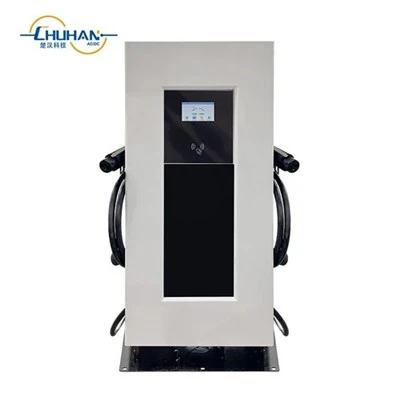
If the peak is actually a row of vehicles, do not use a general-purpose cabinet as a coded charging station. The ACT-DC-186kWH+120kW and ACT-DC-261KWH ESS+160KW units are liquid-cooled integrated storage-and-charging stations. They belong on a depot or commercial parking quote, not as a footnote on a workshop peak-shaving page.
When a site wants both, still write two sections
Many commercial buyers want a weekday peak cut and a weekend backup path. That is legitimate. It is not a reason to merge the two into one vague "energy storage system" paragraph.
Write the peak-shaving duty first: which hours, which loads, whether the 20 kW or 30 kW cabinet class is the starting point. Then write the backup duty: which circuits, how long, and whether UPS-style transfer is required. If the numbers only work with a larger liquid-cooled cabinet (the public 215 kWh, 262 kWh, or 419 kWh classes) or with a 2-hour container (the public 5.031 MWh / 2,515 kW unit), say so after the job is clear - not because the enquiry used the word "commercial."
A home that only needs backup should not be talked into a 512 V outdoor cabinet. A shop that will cycle every weekday should not be sold a 16 kWh tower and a hope that the peak will "fit."
What to send with the enquiry
When you ask CHUHAN to help choose a storage quote, include:
- Whether the primary job is backup, peak shaving, or both, written as two separate duties if both apply
- The circuits that must stay on, and the hours they must run
- Whether transfer time matters (for example, a 10 ms-class UPS requirement) or a short interruption is acceptable
- For peak shaving: the weekday hours and the approximate load you are trying to cut, plus outdoor space for a cabinet
- Whether vehicles will charge on the same site, and whether a storage-coupled DC station is in view
- Single-phase or three-phase supply, and whether a hybrid inverter or an all-in-one cabinet is preferred
CHUHAN manufactures LiFePO4 storage, hybrid inverters, and EV chargers in our factory in Yueqing, Zhejiang. If you tell us whether the job is backup, peak shaving, or a depot load, we can help you quote the right cabinet instead of pasting one storage paragraph onto every enquiry.
Website: https://www.chinachuhan.com/ Email: sales03@chinachuhan.com WhatsApp: +86 189 6895 8968