A quote can look complete and still be unworkable: a 10 kW-class hybrid, a "commercial" battery, and a charger added at the end. The stall often appears when the installer tries to land a 48 V hybrid on a 512 V cabinet, or asks a house tower to do the job of a high-voltage outdoor unit. The first number to write down is not the inverter's kilowatt rating. It is the battery voltage the system is actually built around.
Write the battery voltage on page one of the quote
CHUHAN's public hybrid range and its storage cabinets do not share one battery bus. Treat them as two coupling families.
On the low-voltage side, the hybrids on the English catalogue are built around a 48 V class battery:
- The ACT EUA7200-48 is a 7.2 kW, 48 V single-phase hybrid, with 220/230 V output, dual MPPT, and up to 10.5 kW of PV input.
- The ACT-VX-10K is a 10.2 kW single-phase hybrid with a main AC output and a second AC output for a critical-load panel.
- The 12 kW single-phase hybrid in the 6/8/10/12 kW IP65 series is a 48 V, on/off-grid unit, with charge and discharge current up to 250 A on the 12 kW rating.
- The ACT TPLV-D12000 is a 12 kW three-phase low-voltage hybrid at 230/400 V, with a 40–60 V battery window and charge/discharge current up to 250 A.
- The ACT-TP-LVA15000 is a 15 kW three-phase hybrid at 380/400 V, listed with a 48 V battery and charge/discharge current up to 280 A.
Those current figures are the clue. At 48 V, moving real power means a thick DC path and a battery that was designed for that window. You cannot "adapt" that path onto a cabinet whose working voltage starts near 450 V.
What a 48 V home system actually looks like
For a family house or a small shop that already thinks in 51.2 V packs, stay inside that family. Two public storage examples sit naturally with the hybrids above:
- The 16 kWh home energy storage tower is rated 51.2 V, 314 Ah.
- The 5.12 kWh wall-mounted LiFePO4 pack is in the same 51.2 V class, listed as an all-in-one home system with a 3 kW inverter on the product card.
A practical scene: a villa on a 230 V single-phase board, with lights, refrigeration, and a later 7 kW wallbox, should be quoted as a 48 V hybrid plus a 51.2 V tower or wall pack. If the house later grows, the EUA7200-48 can be paralleled up to six units, and the TPLV-D12000 up to twelve, still inside the low-voltage window. Parallel is a way to add power. It is not a way to jump to a 512 V cabinet.
When the quote belongs on a high-voltage cabinet instead
Once the enquiry is a workshop, a small commercial site, or a load that already wants 20 kW-class three-phase output, look at the outdoor cabinet family rather than forcing a house hybrid to do a plant job.
The CHUHAN 20 kW / 50 kWh outdoor C&I cabinet is an all-in-one, high-voltage LiFePO4 unit in an IP54 enclosure. The public graphic lists a nominal 51.2 kWh at 512 V, a working window of 448–584 V, 20 kW AC output at 220/380 or 230/400 V (3L/N/PE), and 26 kW of PV input. The 30 kW / 60 kWh sibling in the same cabinet size is listed at 61.4 kWh and 614.4 V, with a 537.6–700.8 V working window and 30 kW AC output.
Larger public cabinets go higher still: the UniEnergy P10 card lists 215 kWh at 600–876 Vdc, and the UniEnergy MAX10 card lists 262 kWh at 650–949 Vdc. Those voltage windows are not compatible with the 40–60 V or 48 V hybrids above. If the project is already in this class, the inverter question is not "which 10.2 kW wall unit do we ship?" It is whether the all-in-one cabinet, or a purpose-designed high-voltage system, matches the board.
Do not mix the two families on one drawing
Three habits cause most of the rework:
- Using a 48 V hybrid as if it were the PCS for a 512 V cabinet.
- Quoting a 16 kWh, 51.2 V tower next to a 20 kW three-phase commercial load and hoping the current will "be enough."
- Adding a 22 kW, 32 A three-phase Type 2 wallbox to a 48 V single-phase house quote, then discovering the supply and the battery architecture were never aligned.
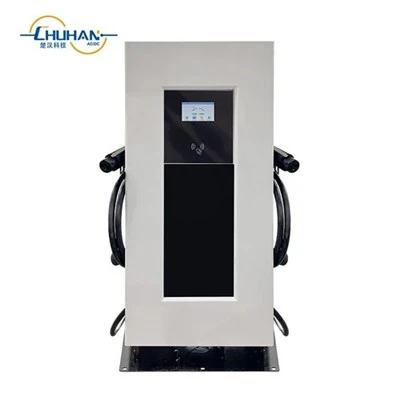
Integrated charging stations are a third architecture again. The ACT-DC-186kWH+120kW and ACT-DC-261KWH ESS+160KW units are liquid-cooled cabinets that combine storage with DC charging. They are not a way to attach a home hybrid to a depot. If vehicles are the load, say so early and quote that family on its own terms.
What to send with the enquiry
When you ask CHUHAN to help choose the hybrid and the battery together, include:
- The intended battery voltage, or a clear statement that you have not chosen one yet
- Whether you want a separate hybrid plus a 51.2 V tower or wall pack, or an all-in-one high-voltage outdoor cabinet
- Single-phase or three-phase supply at the main board, and the nominal voltage
- Planned PV power, and whether the roof has more than one orientation
- Whether an EV charger is in the same project, and whether it is a 7/11 kW single-phase wallbox, a 22 kW three-phase wallbox, or a DC depot charger
- Whether the site may later add parallel low-voltage inverters, or is more likely to step into a 20 kW / 50 kWh-class cabinet
CHUHAN manufactures hybrid inverters, LiFePO4 storage, and AC and DC EV chargers in our factory in Yueqing, Zhejiang. If you share the battery voltage and the board type, we can help you quote one coupling family instead of mixing a house hybrid with a high-voltage cabinet.
Website: https://www.chinachuhan.com/ Email: sales03@chinachuhan.com WhatsApp: +86 189 6895 8968