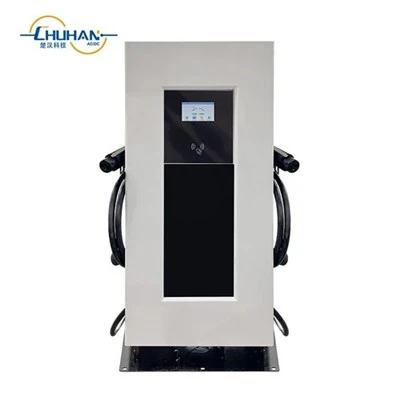
A mixed container of Type 2 wallboxes, CCS DC guns, and GB/T units can look complete in the warehouse and still be hard to place when it lands. The inlet on the vehicle, and the standard expected in that market, will decide whether the stock moves. Charge power matters, but it is the second question. The first question is which connector you are actually shipping.
Lock a written connector plan on the purchase order. Do not leave it as "optional, to be confirmed" on a packing list.
Connectors are market-specific, not decorative options
AC and DC charging use different inlets, and regions are not interchangeable. A Type 2 AC wallbox that is standard for many European driveways will not satisfy a fleet that only has GB/T inlets. A CCS DC gun will not help a site whose vehicles are specified for another DC standard. Distributors who buy "a mix, so we are covered" often discover that the mix is wrong for the first market that actually orders.
Communications and access methods sit beside the connector, but they do not replace it. RFID, app control, and OCPP decide how the site authorises a session. They do not change the gun that has to fit the car.
Home and workplace: lock the AC connector first
For homes, apartment blocks, and workplace parking, the usual CHUHAN conversation is an AC wallbox. The 22 kW three-phase Type 2 unit is listed at 32 A, with a Type 2 interface and an attached cable, for indoor or outdoor installation. The same series graphic also lists 7 kW and 11 kW single-gun options, and dual-gun variants. The product graphics refer to GB/T or Type 2, which is exactly the point: you must say which one is going on the cable before production and packing.
A practical split:
- A family driveway on a single-phase board is usually a 7 kW wallbox, with the connector set to the cars that will actually park there.
- A workplace or small commercial car park with a three-phase board can take the 22 kW, 32 A unit, again with the connector locked.
- If the same customer also wants solar and storage, the wallbox phase has to match the board and the hybrid inverter. A three-phase 22 kW charger should not be added to a single-phase house quote as a last-line extra.
Portable 3.5 kW units have the same rule in a smaller form: the plug on the grid side and the inlet on the car side both need to be named.
Depots and public sites: lock the DC gun plan
For depots, public parking, and highway sites, the connector question moves to the DC gun, and often to two guns.
The ACT-DC-160SH is a 160 kW dual-gun DC fast charger with a DC output of 200–1000 V and OCPP communications. Other public listings for the same model also refer to CCS2 / Type 2 connectors and RFID / app control. Applications shown include commercial parking, public charging, bus depots, and fleet operation. "Dual-gun" only helps if both guns match the vehicles that will queue there, or if the two guns are intentionally different and that split is written down.
If storage is part of the charging offer, the gun standard still has to be locked. The 60 kW / 65 kWh all-in-one DC cabinet is described with RFID, app, and OCPP control; sister listings refer to a dual-gun CCS / GB/T option. The ACT-DC-186kWH+120kW liquid-cooled station is listed with dual guns and a graphic showing dual CCS connectors; sister listings also refer to CCS1 / CCS2 / GB interfaces. The cabinet can store energy and support a tight grid connection, but it cannot invent a connector the vehicle does not have.
A mixed fleet still needs one written plan
Some depots run two inlet types at once - for example, a mixed passenger and commercial fleet, or vehicles bought in different years. That is a reason to specify two gun types on a dual-gun station, or two clearly labelled parking bays. It is not a reason to leave every connector "optional" and hope the warehouse can sort it on the day of dispatch.
Write, for each line on the order:
- The market the units are for
- The vehicle inlet (Type 2, CCS1, CCS2, GB/T, or another stated standard)
- One gun or two, and whether the two guns are the same
- AC wallbox, grid-only DC charger, or storage-coupled station
- How drivers will start a session (RFID, app, or OCPP-backed backend)
If any of those lines is blank, the container is not ready.
What to send with the enquiry
When you ask CHUHAN to prepare a distributor or project quotation for chargers, include:
- Target market and the vehicle inlets already in that fleet or that market
- AC, DC, or both, with the power class you intend to hold (7 / 11 / 22 kW AC, or a named DC rating)
- Number of guns and whether a mixed-gun configuration is required
- Single-phase or three-phase supply at the site
- Whether storage should be integrated, or the charger will stand alone on the grid
- Preferred access method: RFID, app, OCPP, or a stated combination
CHUHAN manufactures hybrid inverters, LiFePO4 storage, and AC and DC EV chargers in our factory in Yueqing, Zhejiang. If you share the connector plan with the power class, we can help you load a container that the destination market can actually install.
Website: https://www.chinachuhan.com/ Email: sales03@chinachuhan.com WhatsApp: +86 189 6895 8968