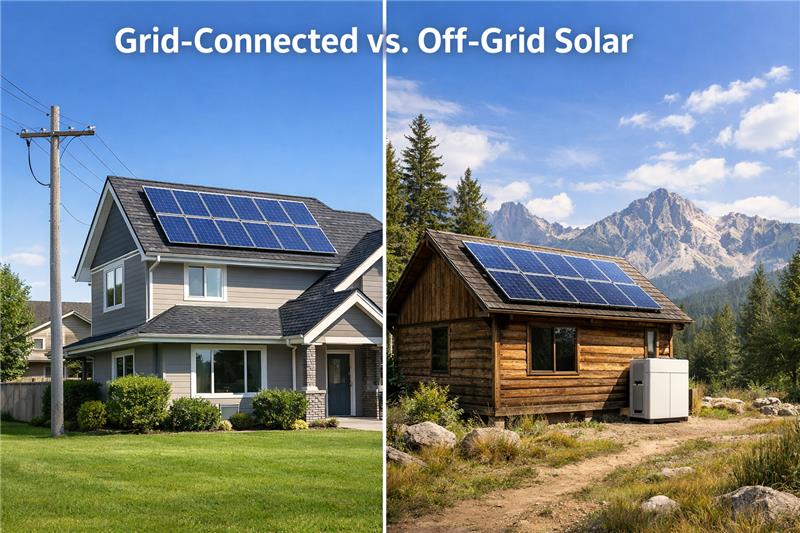
Against the backdrop of accelerating global energy transition, off-grid solar systems are rising from a "niche solution" to a core energy strategy for an increasing number of businesses and industrial operators. According to a report by industry research firm WiseGuy Reports, the global commercial and industrial off-grid solar system market reached $6.26 billion in 2024 and is projected to grow to $15 billion by 2035, at a compound annual growth rate of approximately 8.3%. Escalating electricity prices, increasingly stringent carbon emission regulations, the high cost of extending the grid to remote areas, and businesses' urgent need for energy independence and operational resilience are all driving this growth.
However, switching a facility from the utility grid to an off-grid solar system is far from a simple equipment procurement exercise - it involves multiple dimensions including energy engineering, financial planning, compliance review, and long-term operations and maintenance. Deploying off-grid solar technology requires load profile analysis, array sizing calculations, and battery autonomy calculations, while balancing capital expenditures against long-term operational costs. This article systematically examines the key factors that must be evaluated before installing an off-grid solar system, covering five aspects: energy demand assessment, core component design, economic feasibility analysis, space and maintenance planning, and legal compliance review.
1. Assessing Energy Demand for Off-Grid Solar Systems
Daily Solar Load Audit
Before deploying off-grid solar infrastructure, a comprehensive daily electricity demand inventory must be established - this is the cornerstone of the entire system design.
Facility managers must first conduct a thorough audit of all commercial equipment. You need to list every piece of equipment, record its rated power, and estimate its daily operating hours. Multiplying the equipment power by daily operating hours yields the total daily watt-hours; dividing by 1,000 then determines the daily kilowatt-hour energy requirement. For example, a medium-sized industrial facility equipped with conveyor systems, high-intensity lighting, and refrigeration may have a total daily energy consumption in the range of 200–300 kWh.
Planning a commercial off-grid solar system also requires understanding the variation in electricity consumption between working days and non-working days. Professional management software tracks energy patterns to establish baseline energy demand. You can use load calculators and energy audit tools to model operating scenarios for different seasons and weather conditions - for instance, summer air conditioning loads may be more than double those in winter. This precise data ensures that your solar array and energy storage batteries can meet daily solar energy requirements and avoid power shortages.
Calculating Peak Electricity Demand
Determining the inverter capacity for an off-grid solar system depends on accurately calculating peak electricity demand. You must identify the maximum simultaneous operating load rather than simply summing all nameplate ratings.
Motor-driven equipment such as industrial HVAC compressors and pumps generate high inrush currents at startup - the surge current for inductive loads is 3 to 7 times the steady-state operating current, lasting 0.5 to 3 seconds. The calculation steps are as follows:
- Identify all possible combinations of equipment that could operate simultaneously and determine the worst-case simultaneous operating scenario.
- Calculate the steady-state simultaneous operating power: sum the rated power of all equipment that could operate at the same time.
- Calculate the maximum startup surge: identify the single motor-driven device with the highest inrush current, and add the difference between its surge current and steady-state operating current to the total power.
- Add a 20% safety margin to protect hardware against unexpected transient loads.
For example, if the steady-state simultaneous operating power is 45 kW and the maximum motor startup surge differential is 15 kW, the peak demand is 60 kW; adding the 20% safety margin brings it to 72 kW. The inverter's continuous rated power must cover the steady-state peak, while the surge capacity handles transient currents. This step ensures that equipment meets inverter surge limits and prevents nuisance tripping during off-grid operation.
2. Sizing Core Components of the Off-Grid Solar System
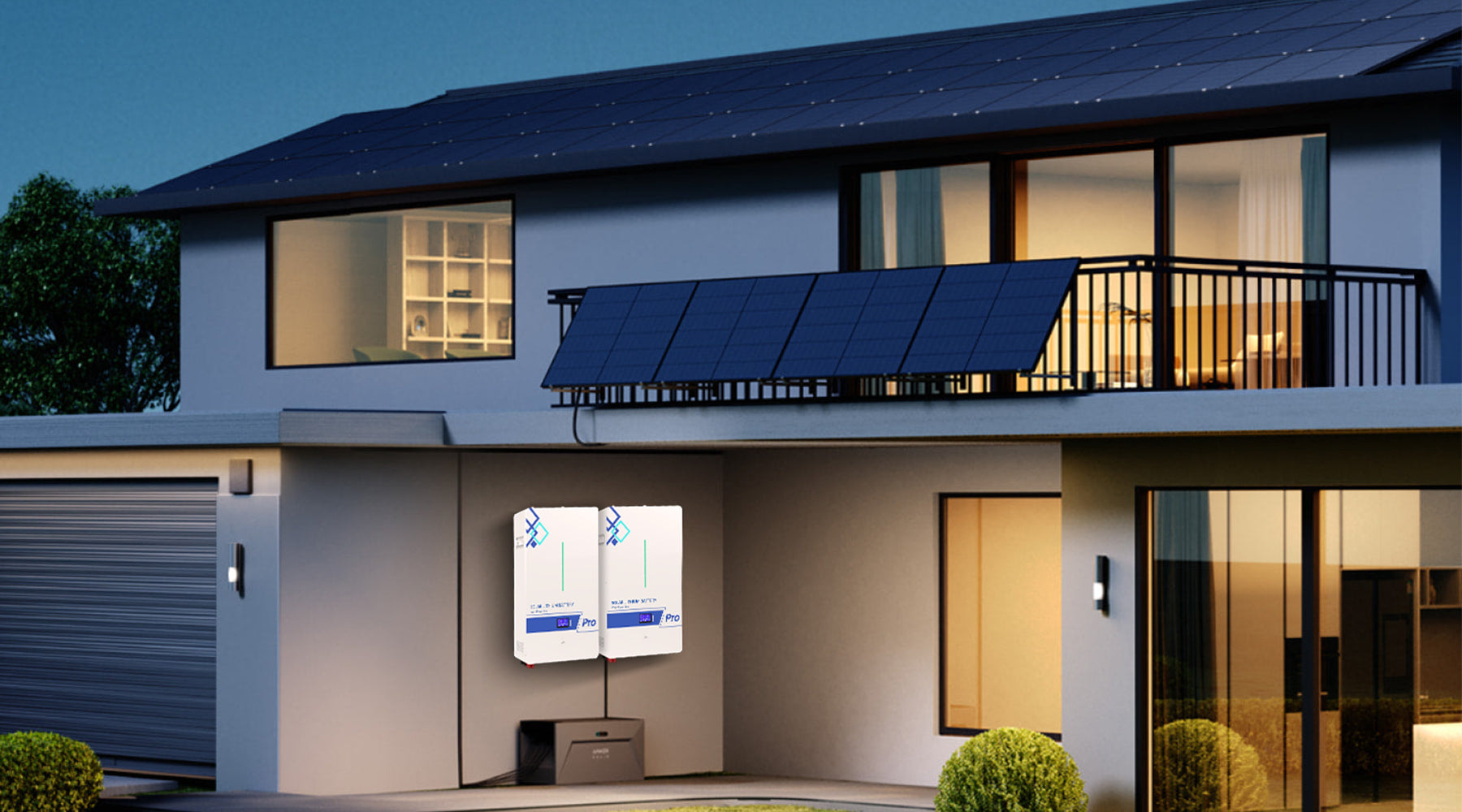
Designing a commercial off-grid solar system requires the precise integration of PV panels, charge controllers, inverters, and lithium battery banks. The following table illustrates the engineering role of each component within the system:
| No. | Component | Engineering Role |
| 1 | Load Analysis | Defines daily energy demand |
| 2 | Battery Bank | Establishes local battery capacity |
| 3 | Charge Controller | Regulates battery current |
| 4 | Inverter | Converts DC to AC power |
| 5 | Solar Panels | Captures solar energy for off-grid operation |
Evaluating Solar Irradiance Potential
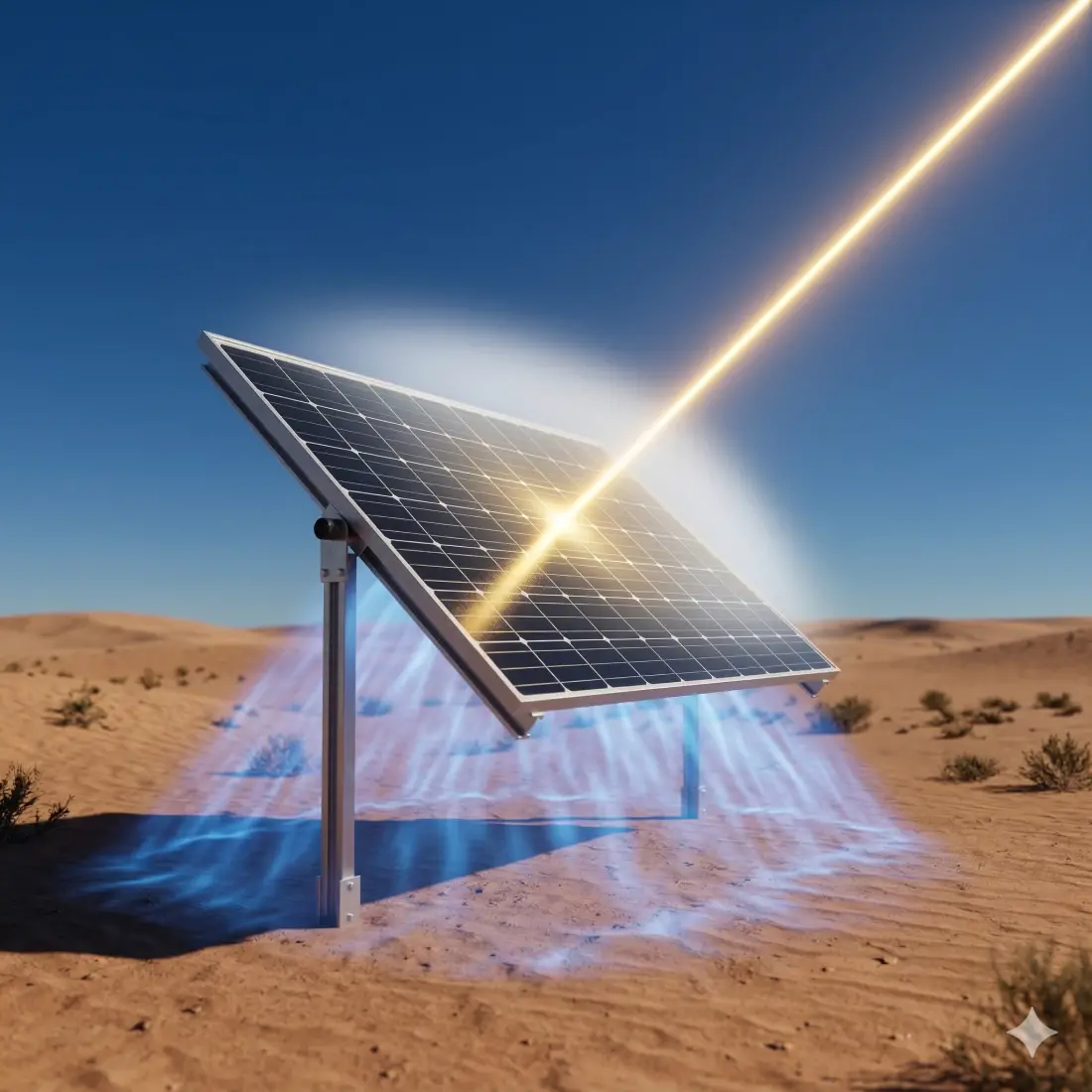
Solar irradiance determines your total daily energy generation. Key evaluation metrics include:
- Peak Sun Hours (PSH): Values vary dramatically by region. The U.S. Southwest averages approximately 6.5 hours annually, while the Northeast sees only 3.5–4.0 hours; Central Australia receives approximately 5.5–6.0 hours, and Southern Europe approximately 4.5–5.0 hours.
- Seasonal variation: Array design must be based on the month with the lowest energy generation throughout the year, not the annual average.
- Panel degradation rate: According to research by the U.S. National Renewable Energy Laboratory (NREL) on nearly 2,000 solar systems, monocrystalline silicon solar panels manufactured after 2000 degrade at approximately 0.4% per year - less than half the 1% annual degradation rate commonly assumed in warranty calculations. Incorporating this factor into the design ensures that panels continue to produce target output decades into their operational life.
- Modern panel efficiency: Modern monocrystalline panels have achieved efficiencies of 20%–23%, and bifacial panel technology can further increase energy yield by 5%–25% through rear-side reflected light.
Selecting Off-Grid Solar Battery Capacity
Determining battery capacity requires evaluating autonomy under multi-day cloudy conditions and involves the following key parameters:
- Days of autonomy: Standard remote commercial operations require a minimum of 3 days of backup battery capacity. Critical facilities (such as communication base stations and medical facilities) are recommended to have 5–7 days.
- Depth of Discharge (DoD): Lithium battery energy storage systems should operate at an 80% depth of discharge to optimize cycle life while maintaining reliable power supply. By comparison, lead-acid batteries are recommended to operate at only 50% DoD.
Capacity calculation formula:
Required total battery capacity (kWh) = Daily energy consumption × Days of autonomy ÷ Depth of discharge ÷ System efficiency
Using an example with daily energy consumption of 264 kWh, 3 days of autonomy, 80% depth of discharge, and 90% system efficiency: Required capacity = 264 × 3 ÷ 0.8 ÷ 0.9 ≈ 1,100 kWh.
3. Economic Feasibility of Off-Grid Solar Systems
Comparing Upfront Costs with Grid-Connected Costs
Evaluating an off-grid solar system requires clear capital allocation, comparing upfront capital expenditures against long-term operational cost savings. Based on 2025 market data:
| System Type | System Size | Initial Cost (incl. installation) | Cost After Incentives |
|---|---|---|---|
| Grid-tied | 6 kW | $15,000–$18,000 | $10,500–$12,600 |
| Hybrid | 6 kW + 10 kWh | $22,000–$30,000 | $15,400–$21,000 |
| Off-grid | 6 kW + 15 kWh | $28,000–$38,000 | $19,600–$26,600 |
| Off-grid | 10 kW + 20 kWh | $40,000–$55,000 | $28,000–$38,500 |
Off-grid solutions avoid the expensive power line extension costs for remote facilities. According to the U.S. Energy Information Administration (EIA) and public data from multiple utility companies, extending the grid to a distance of 1 kilometer in the continental United States typically costs tens of thousands to over a hundred thousand dollars, and actual costs in areas with complex terrain or high regulatory expenses may far exceed this range.
| System Type | Payback Period | Financial Impact |
|---|---|---|
| Commercial grid-tied solar | 3–7 years | Avoids peak grid electricity rates |
| Off-grid solar | 4–10 years | Eliminates ongoing utility dependence |
Over a 25-year lifecycle, a mid-sized off-grid system with an initial installation cost of approximately $25,000, plus battery replacement around year 15 (typically $8,000–$15,000 including installation), inverter replacement (approximately $2,000–$5,000), and routine maintenance, would have a total cost roughly in the $40,000–$55,000 range. By comparison, utility grid electricity over the same period, calculated at $150 per month with a 3% annual increase, would amount to approximately $65,000. This is a highly simplified estimate - actual figures vary depending on regional electricity price trends, system size, and maintenance conditions, and professional financial modeling is recommended for specific projects.
Space Requirements and Maintenance Needs
Space availability directly affects system capacity and installation method. Rooftop installation requires structural verification (panel weight is approximately 15–20 kg/m²) and has the advantage of not占用 additional land. Ground-mounted systems can be equipped with tracking mounts to increase energy yield by 15%–30%, but require additional land and foundation work.
In arid, low-rainfall regions with severe dust accumulation (such as the Middle East, North Africa, and the desert regions of the U.S. Southwest), panel energy output may decline by 15%–25% without regular cleaning; in regions with frequent rainfall, the natural cleaning effect of rain significantly mitigates this impact.
| Service Item | Interval | Operational Purpose |
|---|---|---|
| Panel cleaning | Quarterly | Maintain solar energy output |
| Battery inspection | Semi-annually | Prevent unexpected power outages |
| Inverter maintenance | Annually | Ensure conversion efficiency |
| Wiring inspection | Annually | Prevent poor connections and thermal losses |
4. Ensuring Legal, Safety, and System Compliance
Commercial Permits and Zoning Planning
Before constructing a renewable energy facility, you must obtain an official commercial building permit. A licensed electrical engineer must design the commercial off-grid solar system in compliance with municipal building codes. The local planning commission will review the site plan and issue a conditional use permit.
The system must meet the critical power demands of emergency fire alarms, well pumps, and fire sprinkler pumps. Remote industrial operations must be equipped with battery backup capable of sustaining three days of operation, along with a backup generator featuring an automatic transfer switch. The local fire department requires a review of the project plan before approving operations. Municipal codes require that all buildings using backup power have an external power disconnect breaker installed on the building exterior, enabling emergency personnel to immediately de-energize circuits in the event of an incident.
Compliance with Electrical and Safety Standards
Adherence to the National Electrical Code (NEC) standards ensures the reliability of off-grid systems. Key compliance requirements include:
- Grounding conductor sizing: Determined per NEC Table 250.122. A 40A circuit requires 10 AWG wire, 60–100A circuits specify 8 AWG wire, and larger commercial circuits require 6 AWG wire.
- Equipment grounding: Article 690.43 requires that metal equipment frames and mounting racks be bonded using connectors listed to UL 467.
- Inverter certification: Inverters must carry UL 1741 or IEC 62109 safety certification.
- System voltage: Commercial off-grid solar arrays can operate at up to 1,000V DC.
- Protection functions: Off-grid systems must still meet NEC 690.11 arc-fault circuit interrupter (AFCI) requirements and NEC Article 250 grounding requirements.
It should be noted that NEC 690.12, the rapid shutdown provision, is primarily designed for grid-tied PV systems to protect line workers during grid outages. For fully off-grid, standalone systems, since there is no grid-side voltage, this provision does not directly apply. However, if the system is equipped with a grid-tie interface or may be connected to the grid in the future, the relevant requirements must still be met.
Safe off-grid operation requires durable hazard labeling, proper battery ventilation, and readily accessible disconnect switches.
5. Conclusion
Successful off-grid solar deployment requires load auditing, component selection, financial modeling, and compliance review. The following is a comparison reference for different system configurations:
| System Option | Payback Period | Battery Cost Share |
|---|---|---|
| Hybrid commercial system | 5–8 years | 30%–50% of total cost |
| Fully off-grid configuration | 7–12 years | Highest share of total investment |
Selecting high-quality off-grid solar components helps enhance a company's sustainability capabilities and strengthens energy independence. Regardless of which path is chosen, meticulous planning and professional engineering design are the keys to ensuring project success.
The transition to electric mobility is an irreversible trend, and robust infrastructure is the cornerstone supporting this shift. At Wenzhou Chuhan Technology, we are proud to be a Tier-1 integrator and source manufacturer in the new energy sector.
Whether you are an operator, distributor, or individual buyer, and whether you require highly reliable EV Chargers, efficient Solar Inverters, or durable Energy Storage Systems, we provide highly competitive hardware and customized solutions tailored to your needs.
Contact us today to get our latest product catalog and an exclusive quote. Let's empower global sustainable transportation together.
WhatsApp:
+86 173 6959 1971
sales07@chinachuhan.com