

Powerful Solutions For Business Growth
The world of hybrid vehicles can be dizzying, with a constant barrage of new acronyms and battery technologies flooding the market. HEV, PHEV, MHEV, BEV - these letter combinations can leave consumers thoroughly confused. This comprehensive guide will break down the charging principles behind hybrid vehicles and help you determine whether your car needs to be plugged in.
Tailored for prospective car buyers, daily commuters, and fleet managers, this guide is designed to help you evaluate whether a standard hybrid, a plug-in hybrid (PHEV), or a fully electric vehicle (BEV) best suits your lifestyle.
Types of Hybrid Vehicles and How They Work
Before answering the question "Do hybrid cars need to be charged?", we need to understand the three main types of hybrid vehicles and how their powertrains operate on modern roads.
Mild Hybrid Electric Vehicles (MHEV)
Mild hybrids represent the most basic level of electrification. Their primary purpose is to assist the conventional gasoline engine, not to propel the vehicle on electric power alone.
Definition: A mild hybrid uses a small electric motor (typically paired with a 48V battery pack) to assist the gasoline engine. It can power onboard electrical systems and provide smoother stop-start functionality, but it cannot drive the vehicle on battery power alone.
Powertrain: The electric motor is usually integrated into the starter motor/generator or the transmission, working in tandem with the engine to reduce fuel consumption. It assists engine operation but does not independently drive the wheels.
Pros and Cons:
- Pros: Lower cost, reduced engine load, smoother stop-start system - currently an affordable solution for many conventional vehicles to achieve "lower emissions."
- Cons: No all-electric range; limited fuel savings compared to full hybrids (typically only an 8%–15% improvement).
Full Hybrid Electric Vehicles (HEV)

Full hybrids are the most common type of hybrid and have been around for decades, delivering impressive fuel savings.
Definition: A full hybrid (also known as a "conventional hybrid") combines a gasoline engine with an electric motor, which can power the vehicle either together or independently. The Toyota Prius, Toyota Corolla Hybrid, and Honda Accord Hybrid are classic representatives of this category.
Powertrain: Using a parallel or series-parallel hybrid architecture, the vehicle can be driven by the gasoline engine, the electric motor, or both simultaneously. Advanced systems such as regenerative braking and engine energy management automatically recharge the battery while driving - no external power source required.
Pros and Cons:
- Pros: No plug-in required, excellent fuel economy, lower purchase price than PHEVs or BEVs, and driving habits are identical to a conventional car - just fill up with gas.
- Cons: Extremely limited all-electric range (typically less than 1–2 km); small battery capacity (usually around 1–2 kWh).
Plug-In Hybrid Electric Vehicles (PHEV)
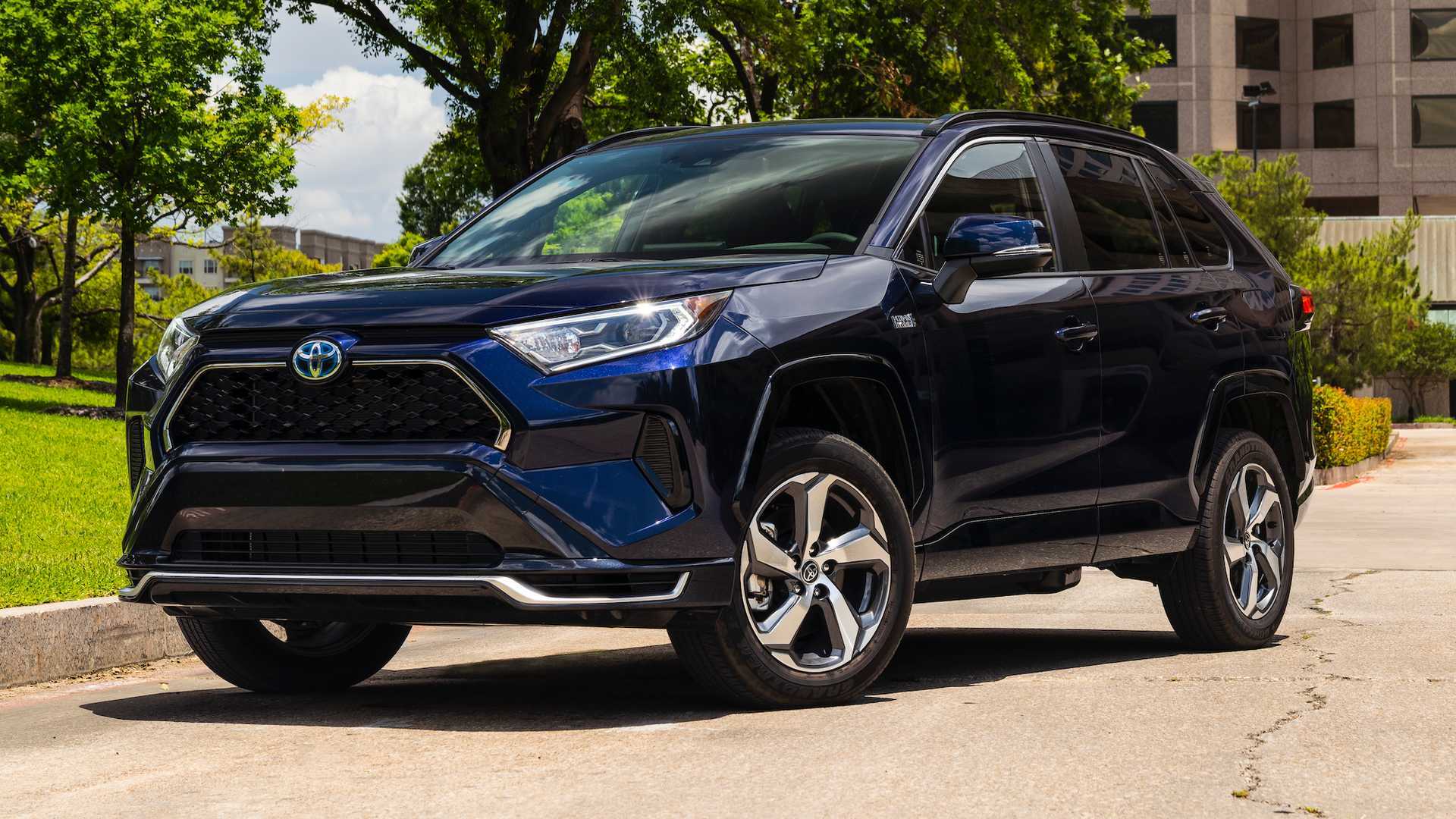
PHEVs are designed for external charging and all-electric driving. Equipped with a larger-capacity battery that can be charged via a household outlet or public charging station, they bridge the gap between conventional hybrids and fully electric vehicles.
Definition: A plug-in hybrid is equipped with a larger-capacity traction battery pack that can be charged from an external power source, providing tens of kilometers of all-electric range before switching to standard hybrid operation mode once the battery is depleted.
Powertrain: The battery powers the electric motor to drive the vehicle until the charge drops to a threshold, at which point the gasoline engine kicks in to provide power. Representative PHEV models on the global market include the Toyota RAV4 Prime / RAV4 Plug-in Hybrid, Volvo XC60 Recharge, BMW 330e, and Mitsubishi Outlander PHEV, among others.
Pros and Cons:
- Pros: Offers 20–60 miles (approximately 30–100 km) or more of all-electric range, eliminating fuel consumption for daily commutes; the gasoline engine provides a safety net for long-distance driving with zero range anxiety; significantly lower per-mile fuel costs.
- Cons: Higher purchase price, heavier vehicle weight (due to the larger battery), and regular plug-in charging is required to achieve optimal efficiency.
Three Ways the Hybrid Battery Gets Charged
To understand how hybrid vehicles operate and recharge, it's essential to understand how three different energy sources work in coordination.
Regenerative Braking (Energy Recovery)
This is the core charging mechanism shared by all hybrid vehicles. When the vehicle decelerates or travels downhill, the electric motor reverses its function and acts as a generator, recapturing kinetic energy that would otherwise be wasted as heat in the brake pads and converting it into electrical energy stored in the battery pack.
Specifically, regenerative braking charging is triggered in the following two scenarios:
- Lifting off the accelerator pedal while driving in D (Drive)
- Pressing the brake pedal while driving in D (Drive)
Regenerative braking not only charges the battery but also provides additional deceleration force while reducing brake pad wear, thereby extending the lifespan of the braking system.
Engine-Driven Charging
While driving, when the battery charge drops below a system-set threshold, the internal combustion engine drives a generator to recharge the battery. Additionally, when the vehicle is idling (such as at a red light), if the battery level is low, the gasoline engine will automatically start and drive the generator to replenish the battery.
External Power Source Charging (PHEV Only)
For plug-in hybrids, plugging into a 120V household outlet (Level 1 charging) or a 240V charging station (Level 2 charging) transfers electricity directly from the grid to the battery pack. This is the charging method unique to PHEVs and is the key enabler of their longer all-electric range.
Do Hybrid Cars Need to Be Charged? The Core Difference Between HEV and PHEV
To answer the question "Do hybrid cars need to be charged?", it is essential to distinguish whether you are driving a standard hybrid or a plug-in hybrid.
Full Hybrid (HEV): No. Standard hybrids have no external charging port and cannot be plugged in. Their intelligent energy management system automatically recharges the battery through regenerative braking and engine-driven generation while driving. The only thing you need to do is refuel regularly, just like a conventional gasoline car.
Plug-In Hybrid (PHEV): Not mandatory, but strongly recommended. A PHEV can run entirely on the gasoline in its tank, but charging the battery in advance significantly improves fuel efficiency, delivers a quieter and smoother all-electric driving experience, and substantially reduces operating costs.

What Happens If a Plug-In Hybrid Is Never Charged?
Don't worry - if you never charge it, a PHEV won't break down. It will simply default to operating as a standard hybrid. However, you will miss out on some significant advantages and face certain operational trade-offs.
Fuel Economy Disadvantage
PHEVs are equipped with larger battery packs and are heavier than comparable conventional HEVs or gasoline-only vehicles. Hauling that extra weight around with an uncharged battery can actually result in worse fuel economy than a comparable non-plug-in model. For example, the PHEV version of certain compact SUVs may deliver 2–4 mpg less in fuel economy when running in a depleted-battery state compared to the standard HEV version in the same lineup.
Long-Term Battery Health Implications
The vehicle's control system retains a certain charge buffer to prevent the battery from being fully discharged. However, if the lithium-ion battery remains at a low state of charge for extended periods without regular charge-discharge cycles, it may affect the battery's long-term lifespan and capacity retention.
Recommendation
Be sure to consult your vehicle manufacturer's owner's manual for specific guidance on battery maintenance and storage to ensure optimal vehicle efficiency and long-term battery health.
Hybrid Vehicles vs. Fully Electric Vehicles
Fully electric vehicles (BEVs) rely entirely on charging infrastructure, whereas hybrid vehicles retain a gasoline engine as an alternative fuel source, eliminating the need to search for charging stations on long trips. Below is a comprehensive comparison of the three powertrain types:
| Comparison Item | Full Hybrid (HEV) | Plug-In Hybrid (PHEV) | Battery Electric (BEV) |
|---|---|---|---|
| Requires External Charging? | No | Optional (but recommended) | Mandatory |
| Has a Gasoline Engine? | Yes | Yes | No |
| All-Electric Range | Less than 1–2 km | 20–60 miles (30–100 km) | 200–400+ miles (320–640+ km) |
| Refueling / Charging Time | 3–5 minutes at a gas station | Level 2: 2–4 hours / Gas: 3–5 min | DC Fast Charge: 15–40 min / Level 2: 6–10 hrs |
| Typical Energy Cost | Standard gasoline prices | Very low (EV mode) / Standard (gas mode) | Lowest overall per-mile cost |
| Regenerative Braking | Yes | Yes | Yes |
Hybrid Efficiency, Costs, and Real-World Savings
Quantifying All-Electric Mode Efficiency
When driving in all-electric mode, efficiency is measured in MPGe (Miles Per Gallon equivalent). Top-tier PHEV models typically achieve over 100 MPGe in electric mode.
Electricity vs. Gasoline Cost Comparison
The cost of fully charging a PHEV battery at home varies significantly depending on local electricity rates. Taking a 14 kWh battery pack as an example: in many countries and regions, a full charge at local residential electricity rates typically costs only a few dollars (or the local currency equivalent), yet can provide 30–50 miles (approximately 48–80 km) of all-electric range - far cheaper than purchasing an equivalent amount of gasoline. However, the exact savings depend on your local electricity and gasoline prices, so we recommend calculating based on your actual local rates.
Daily Commute Savings Example (Based on a 15-Mile / ~24 km One-Way Commute)
- Charged PHEV (all-electric mode): Electricity cost is extremely low, typically under $1 (depending on local electricity rates)
- Comparable gasoline car (25 mpg combined, $3.70/gallon): Fuel cost approximately $2.20
- Annual savings: Based on approximately 12,000 miles (~19,000 km) of annual commuting, you can save hundreds of dollars per year on fuel - the exact amount varies depending on local gasoline and electricity prices
Popular Hybrid Vehicle Examples
To help you more clearly understand the different types of hybrid vehicles, here are some representative models widely sold across global markets:
Full Hybrid (HEV) Representative Models
- Toyota Corolla / Levin Hybrid: One of the best-selling hybrid sedans in the world, with combined fuel consumption of approximately 4.0–4.5 L/100 km. No charging required; a full tank can deliver around 1,000 km of range.
- Toyota Camry Hybrid: A benchmark mid-size sedan that delivers performance comparable to a 3.0L V6 engine while achieving exceptionally low fuel consumption.
- Honda Accord Hybrid: Equipped with Honda's i-MMD dual-motor hybrid system, it relies primarily on electric motor drive in city driving, providing a smoothness close to that of a pure electric vehicle.
Plug-In Hybrid (PHEV) Representative Models
- Toyota RAV4 Prime / RAV4 Plug-in Hybrid: One of the most popular plug-in hybrid SUVs worldwide, with approximately 42 miles (68 km) of all-electric range and a combined output of 302 horsepower.
- Volvo XC60 Recharge: A representative PHEV from the Nordic luxury brand, with approximately 35 miles (56 km) of all-electric range, balancing luxury refinement with environmental performance.
- Mitsubishi Outlander PHEV: One of the world's earliest mass-produced plug-in hybrid SUVs, featuring a dual-motor all-wheel-drive system.
- BYD Tang DM-i / Song PLUS DM-i: Widely popular plug-in hybrid SUVs in China and multiple overseas markets, with all-electric ranges of up to 100–210 km (CLTC cycle) and fuel consumption as low as 3.5–5.0 L/100 km even with a depleted battery.
Mild Hybrid (MHEV) Representative Models
- Volvo's Full 48V Mild Hybrid Lineup: Volvo has made its 48V mild hybrid system standard across virtually its entire model range.
- Mercedes-Benz C-Class / E-Class EQ Boost: Achieves assisted driving and smoother stop-start experiences through a 48V integrated starter generator (ISG).
Maintenance, Warranties, and Hybrid Battery Longevity
Hybrid vehicles generally have lower routine maintenance requirements than conventional gasoline cars, and their critical components are backed by strong legal warranty protections.
Warranty Coverage
Warranty regulations vary by country and region. In the United States, for example, federal regulations mandate a minimum hybrid battery warranty of 8 years / 80,000 miles, while states following California Air Resources Board (CARB) standards extend this to 10 years / 150,000 miles. In Europe, manufacturers typically offer an 8-year / 160,000 km battery warranty. We recommend checking the regulations and manufacturer warranty policies applicable to your region.
Routine Maintenance
Hybrid vehicles significantly reduce brake pad wear through regenerative braking, but standard gasoline engine maintenance items - such as oil changes, spark plug replacements, and air filter service - still need to be performed at the intervals recommended by the manufacturer. Overall, HEV maintenance costs are typically lower than those of comparable gasoline vehicles, thanks to reduced engine load and less brake wear.
Battery Care Recommendations
- Avoid prolonged exposure of the vehicle to extreme heat
- Avoid leaving the battery at a very low state of charge for extended periods
- For PHEVs, maintain regular charge-discharge cycles
- For HEVs, even during prolonged parking, it is advisable to drive the vehicle for at least 30 minutes every few months to prevent excessive battery discharge
Maintenance, Warranties, and Hybrid Battery Longevity
Hybrid vehicles generally have lower routine maintenance requirements than conventional gasoline cars, and their critical components are backed by strong legal warranty protections.
Warranty Coverage
Warranty regulations vary by country and region. In the United States, for example, federal regulations mandate a minimum hybrid battery warranty of 8 years / 80,000 miles, while states following California Air Resources Board (CARB) standards extend this to 10 years / 150,000 miles. In Europe, manufacturers typically offer an 8-year / 160,000 km battery warranty. We recommend checking the regulations and manufacturer warranty policies applicable to your region.
Routine Maintenance
Hybrid vehicles significantly reduce brake pad wear through regenerative braking, but standard gasoline engine maintenance items - such as oil changes, spark plug replacements, and air filter service - still need to be performed at the intervals recommended by the manufacturer. Overall, HEV maintenance costs are typically lower than those of comparable gasoline vehicles, thanks to reduced engine load and less brake wear.
Battery Care Recommendations
- Avoid prolonged exposure of the vehicle to extreme heat
- Avoid leaving the battery at a very low state of charge for extended periods
- For PHEVs, maintain regular charge-discharge cycles
- For HEVs, even during prolonged parking, it is advisable to drive the vehicle for at least 30 minutes every few months to prevent excessive battery discharge
Optimal Charging Strategies and Cold Weather Considerations
The 20%–80% Charging Window
For PHEV owners, keeping daily charging between 20% and 80% can reduce internal stress on the battery and extend its service life. This is consistent with battery care recommendations for fully electric vehicles.
Cold Weather Care
In cold climates, battery performance temporarily declines, and all-electric range may be reduced by 20%–40%. Recommendations:
- Pre-heat the cabin during winter while the vehicle is plugged in, so that grid electricity - rather than battery energy - is used for cabin heating, preserving precious battery charge for driving
- Park the vehicle in a garage to minimize the battery's exposure to low temperatures
- Understand the actual range reduction in your area during winter and plan your trips accordingly
Vehicle Selection Decision Tool
Comparison Table: HEV vs. PHEV vs. BEV
| Feature | Full Hybrid (HEV) | Plug-In Hybrid (PHEV) | Battery Electric (BEV) |
|---|---|---|---|
| Requires External Charging? | No | Optional (recommended) | Mandatory |
| Has a Gasoline Engine? | Yes | Yes | No |
| All-Electric Range | Less than 1–2 km | 20–60 miles (30–100 km) | 200–400+ miles (320–640+ km) |
| Regenerative Braking? | Yes | Yes | Yes |
| Long-Distance Travel Convenience | High (just refuel) | High (gas + electric complement) | Moderate (requires charging station planning) |
| Daily Operating Cost | Moderate | Low (when charged) / Moderate (depleted) | Lowest |
Pre-Purchase Self-Assessment Checklist
- Do I have access to a power outlet or the ability to install a charging station at my overnight parking location?
- Is my daily commute distance within the PHEV's all-electric range (typically under 40 km one way)?
- Do I frequently take long road trips and prefer not to spend time charging along the way?
- What are the electricity and gasoline prices in my area? Is electricity significantly cheaper than gasoline?
- Am I willing to adopt a regular charging habit to maximize fuel economy?
FAQ
Q: Is a "Self-Charging Hybrid" Real, or Just a Marketing Gimmick?
A: "Self-charging hybrid" is essentially a marketing term for a standard full hybrid (HEV). They indeed do not require external charging - the battery is charged solely through regenerative braking and the engine-driven generator. But this is hardly "black magic"; the Toyota Prius has been doing this since 1997. The key issue is that this "self-charging" capability comes at the expense of all-electric range - the battery capacity is small and cannot provide any meaningful zero-emission driving distance.
Q: Does a Hybrid Car Charge While Idling?
A: Yes. If the hybrid battery's state of charge drops below the system's minimum safe threshold (typically between 15%–30%) while the vehicle is idling - such as at a red light or in traffic - the gasoline engine will automatically start and drive the generator to recharge the battery. This process is fully controlled by the vehicle's intelligent energy management system and requires no action from the driver.
Q: Does a Plug-In Hybrid Require Special Auto Insurance?
A: Generally, no. PHEV insurance rates are calculated similarly to those for standard gasoline vehicles, though premiums may be slightly higher because PHEVs typically have a higher purchase price (due to the larger battery and more complex powertrain). Specific rates vary by insurance provider and region, so it's advisable to obtain quotes from multiple insurers before purchasing.
The transition to electric mobility is an irreversible trend, and robust infrastructure is the cornerstone supporting this shift. At Wenzhou Chuhan Technology, we are proud to be a Tier-1 integrator and source manufacturer in the new energy sector.
Whether you are an operator, distributor, or individual buyer, and whether you require highly reliable EV Chargers, efficient Solar Inverters, or durable Energy Storage Systems, we provide highly competitive hardware and customized solutions tailored to your needs.
Contact us today to get our latest product catalog and an exclusive quote. Let's empower global sustainable transportation together.
Phone Number
+86 173 6959 1971
sales07@chinachuhan.com



