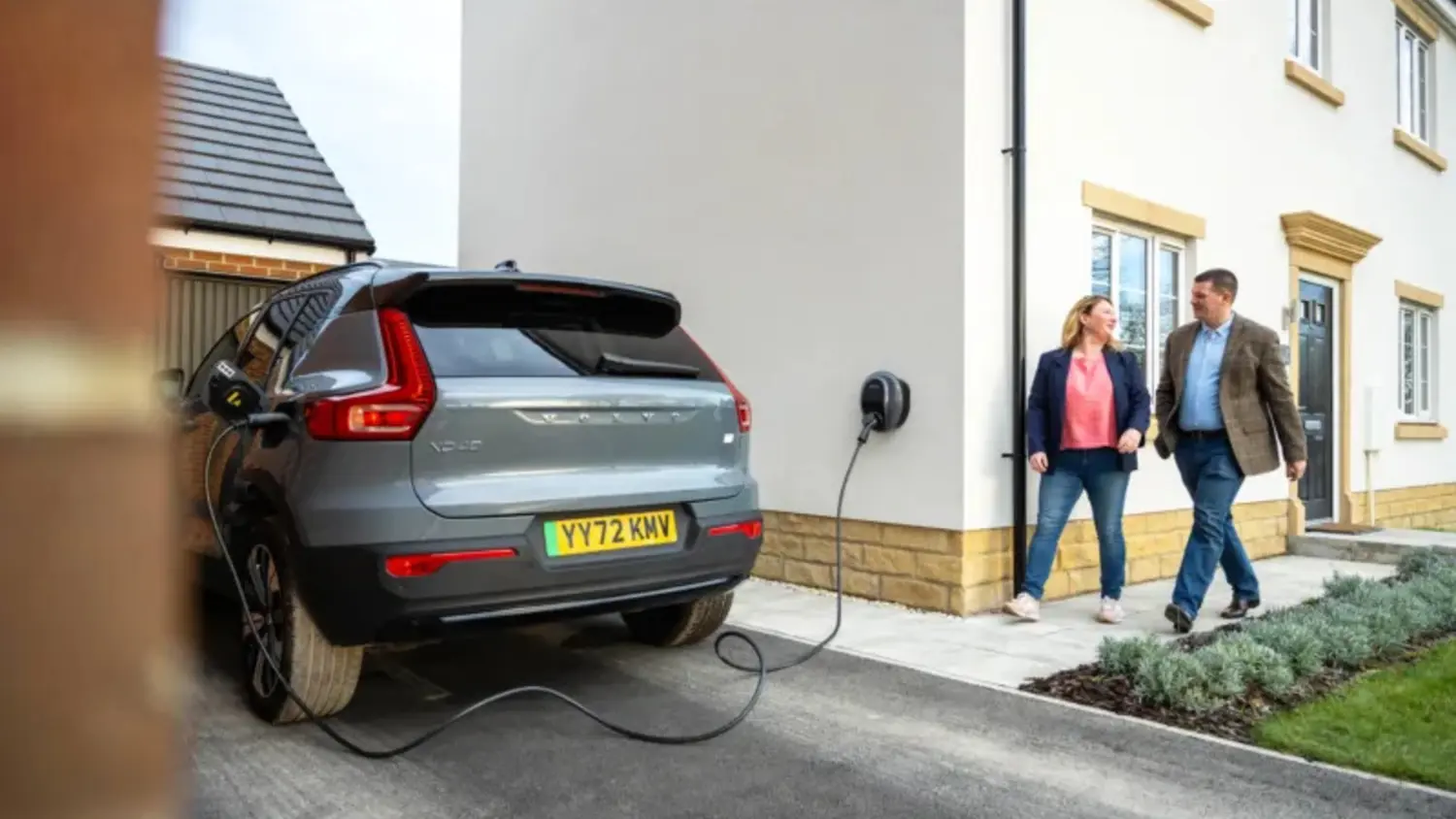
Over the past decade, electric vehicles (EVs) have rapidly gained popularity, driven by breakthroughs in battery technology and a growing global emphasis on sustainable mobility. However, alongside the rise of EVs, many consumers have begun questioning their safety and comparing them with conventional internal combustion engine (ICE) vehicles. Claims such as "EVs catch fire on impact" and "EV batteries are unsafe" have spread widely on social media, fueling considerable concern.
Are electric vehicles truly more dangerous than conventional ICE vehicles? In what ways are EVs safer than regular cars, and what unique safety challenges do they present? This article draws on authoritative crash test data, multi-national EV fire statistics, and the latest safety regulations to provide an in-depth, comprehensive, and objective examination of every aspect of electric vehicle safety.
Vehicle Weight and Collision Dynamics
Sources of Weight Differences
Because electric vehicles require large-capacity battery packs, their overall weight is typically greater than that of comparable ICE vehicles. A typical battery pack for a battery-electric passenger car weighs between 300 and 700 kilograms. These packs are usually spread flat across the vehicle's floor, significantly increasing the vehicle's overall mass. While the engine and transmission of an ICE vehicle also carry substantial weight, EVs are generally 10%–30% heavier than their ICE counterparts in the same class.
The Double-Edged Sword of Weight on Safety
The additional weight of an EV is a double-edged sword when it comes to safety.
The favorable side: According to the principles of collision dynamics, in a two-vehicle crash, the heavier vehicle generally offers better protection for its occupants - more of the crash energy is absorbed by the lighter vehicle. This means that in a collision between an EV and an ICE vehicle, occupants of the EV tend to experience lower impact forces. Multiple studies by the Insurance Institute for Highway Safety (IIHS) and the National Highway Traffic Safety Administration (NHTSA) have confirmed that, in both frontal and side impacts, heavier vehicles provide a greater safety margin for their occupants.
The unfavorable side: The added weight also poses greater safety challenges for the other vehicle involved in a collision. When an EV collides with a lighter, smaller ICE vehicle, the lighter party may face a higher risk of injury. Additionally, greater mass means longer braking distances, which can be a disadvantage in emergency avoidance scenarios.
Center of Gravity and Rollover Risk
A vehicle's center of gravity significantly affects its stability and safety. A lower center of gravity reduces the risk of rollover accidents, which are among the leading causes of fatalities in motor vehicle crashes.
Because EV battery packs are typically mounted flat on the floor - positioned far lower than the engine and fuel tank of an ICE vehicle - EVs inherently have a lower center of gravity. This low-center-of-gravity design delivers multiple safety benefits:
- Reduced rollover probability: During emergency lane changes or cornering, vehicles with a lower center of gravity are less prone to tipping over.
- Improved handling stability: A lower center of gravity makes the vehicle more stable during high-speed lane changes and emergency maneuvers.
- Enhanced cornering performance: Reduced body roll increases driver confidence and control.
By contrast, the engine and transmission of an ICE vehicle are concentrated in a relatively high position at the front of the vehicle, resulting in a higher center of gravity and a greater tendency to roll over under extreme handling conditions.
Crash Test Performance: How Do EVs Fare?
Evaluations by Global Authoritative Testing Agencies
Electric vehicles are subject to the same standardized crash test protocols as ICE vehicles. The world's major safety assessment organizations - including the U.S. NHTSA and IIHS, Europe's Euro NCAP, Australia's ANCAP, and Japan's JNCAP - all use crash test dummies to evaluate occupant injury risk.
According to crash test data from the Australasian New Car Assessment Program (ANCAP), the gap between EVs and ICE vehicles in terms of five-star safety rating rates is not significant, as both follow globally harmonized crash safety standards.
Structural Safety Advantages
In actual crash tests, EVs have demonstrated structural safety advantages across multiple dimensions:
- Larger frontal crush zones: Without a front-mounted engine and transmission, the entire front section of an EV can be designed as a crumple zone, distributing impact forces more evenly and reducing the risk of intrusion into the occupant cell.
- Greater body rigidity: The integration of the battery pack with the vehicle structure effectively adds an additional load-bearing skeleton. For example, certain dedicated EV platforms achieve whole-vehicle torsional rigidity exceeding 50,000 N·m/deg - significantly higher than comparable ICE models.
- Side-impact protection: The battery pack mounted on the floor enhances lateral body rigidity, providing stronger protection for the occupant cell in side-impact collisions.
In Euro NCAP and IIHS crash tests, numerous mainstream battery-electric models have achieved the highest ratings in occupant protection categories, performing exceptionally well in the most demanding test scenarios - including the 25% small-overlap frontal crash and side-impact tests. Many of these models have also earned top marks in roof strength and seat/head restraint evaluations.

Fire Risk: The Gap Between Data and Perception
The Real Comparison of Fire Probability
One of the most closely scrutinized safety concerns regarding EVs is the fire risk associated with lithium-ion batteries. Media coverage often amplifies this possibility, leading to public misunderstanding and panic. However, authoritative data from multiple countries demonstrates that the probability of an EV fire is actually lower than that of an ICE vehicle:
- U.S. data: According to data published by the National Transportation Safety Board (NTSB) and industry research organizations, the overall fire rate for electric vehicles is lower than that of conventional ICE vehicles, though specific figures vary depending on the statistical scope (e.g., whether charging and parked states are included).
- Norway and Australia data: Statistical studies from Norway and Australia also show that the frequency of EV fires is significantly lower than that of conventional ICE vehicles. Specific figures vary by statistical methodology and year, but the overall trend is consistent.
- Tesla data: In its annual Impact Report, Tesla has disclosed that its vehicles experience a fire only once every tens of millions of miles driven - far below the U.S. automotive industry average. Specific figures vary by year and statistical methodology, but the overall trend clearly indicates that Tesla vehicles have a significantly lower fire probability than the industry average.
Why Does Public Perception Diverge from the Data?
Despite the clear data, the impression that "EVs are more prone to catching fire" remains deeply entrenched. This perception gap mainly stems from three factors:
- Amplification effect: EV fire incidents are visually dramatic and highly newsworthy, spreading rapidly on social media. By contrast, ICE vehicle fires - typically caused by fuel line leaks - tend to burn more gradually and rarely make headlines.
- New-technology anxiety: The general public lacks a deep understanding of lithium-ion battery technology and has an instinctive fear of "battery fires."
- Statistical bias: Because the EV fleet is relatively small, each individual fire incident appears statistically more "prominent."
Differences in Firefighting Difficulty After a Fire Ignites
It is important to objectively note that while EVs have a lower probability of catching fire, once a fire does occur, it is indeed more difficult to extinguish. Lithium battery thermal runaway is a cascading exothermic reaction that requires large volumes of water to suppress, has a prolonged cooling cycle, and carries a risk of re-ignition. By contrast, ICE vehicle fires typically involve flammable liquid fuels that can be quickly suppressed with conventional fire extinguishers.
However, the latest battery safety technologies are fundamentally addressing this issue. New battery safety regulations in the European Union, North America, and other regions have made "no fire, no explosion" after cell-level thermal runaway a mandatory standard, requiring that after a single cell enters thermal runaway, the entire pack must remain free of fire and explosion for at least a 2-hour observation period. The formal implementation of these standards will impose even higher safety requirements on EV batteries.
Lithium-Ion Battery Safety: A Multi-Layered Technical Protection System
Causes of Battery Thermal Runaway
When a lithium-ion battery is subjected to extreme conditions - such as overcharging, internal short circuits, external impact or crushing, or prolonged exposure to high temperatures - internal heat can accumulate rapidly and trigger a violent chain chemical reaction known as thermal runaway. This is the primary cause of EV fires.
Multi-Layer Safety Protection Design
To minimize the risk of thermal runaway, modern EVs employ a multi-layered, defense-in-depth strategy:
- Cell-level protection: The use of cathode materials with high thermal stability (such as lithium iron phosphate, or LFP), combined with ceramic-coated separators and flame-retardant electrolytes, enhances the heat resistance of each cell at the source.
- Module-level thermal insulation: High-efficiency insulating materials such as aerogel or ceramic fiber boards are placed between cells. These materials can withstand temperatures exceeding 1,000°C, effectively preventing thermal runaway in one cell from propagating to adjacent cells.
- System-level protection: The battery pack is housed in a high-strength enclosure equipped with directional exhaust channels that vent high-temperature gases downward toward the vehicle floor, preventing heat and smoke from entering the occupant cabin.
- Intelligent monitoring: Next-generation Battery Management Systems (BMS) embed miniature temperature and gas sensors next to every cell, paired with AI algorithms that monitor battery status in real time. These systems can issue vehicle-level alerts before thermal runaway occurs and automatically trigger countermeasures such as door unlocking and window lowering to facilitate evacuation.
Physical Disconnect Devices
New vehicle safety standards in North America and Europe also introduce requirements for independent physical disconnect devices, enabling the driver or rescue personnel to sever the entire high-voltage circuit with a single action. Even if the vehicle's electronic systems fail after a collision, the disconnect function remains operational.
Pedestrian and Cyclist Safety
The Challenge of Low-Speed Silence
Electric vehicles are nearly silent at low speeds, making it difficult for pedestrians and cyclists to detect their presence - especially in urban environments. This safety concern should not be overlooked, as it may increase the likelihood of pedestrian accidents.
Regulatory Response
To address this challenge, multiple regions worldwide have enacted regulations requiring EVs to emit artificial warning sounds at low speeds:
- European Union: Since July 2019, all newly type-approved EV models must be equipped with an Acoustic Vehicle Alerting System (AVAS). Since July 2021, this requirement has been extended to all newly registered EVs, which must automatically emit an identifiable sound at speeds below 20 km/h.
- United States: NHTSA requires all hybrid and fully electric vehicles to emit a warning sound meeting minimum decibel requirements when operating at low speeds.
- Japan, South Korea, Australia, and other markets have also implemented similar regulations.
By contrast, conventional ICE vehicles do not face this issue due to the inherent noise produced by their internal combustion engines. With the widespread adoption of AVAS, the safety risk that EVs pose to pedestrians is being effectively mitigated.
Active Safety Technologies: Additional Advantages of EVs
Electric vehicles enjoy inherent technological advantages in the realm of active safety, primarily in the following areas:
Rapid Response of Electric Motor Braking
The braking response speed of an electric motor far exceeds that of a conventional mechanical braking system, with no mechanical delay from a transmission or hydraulic lines during emergency avoidance maneuvers. This means that in emergency situations, EVs can decelerate or evade obstacles more quickly.
Standardization of Advanced Driver Assistance Systems (ADAS)
As "next-generation" products, EVs are often the first to be equipped with the latest active safety technologies, such as Automatic Emergency Braking (AEB), Adaptive Cruise Control, Lane Keeping Assist, and 360-degree surround-view cameras. These systems are now commonly standard even on mid- to low-priced EVs, while ICE vehicles at the same price point may only offer a basic rearview camera.
Automatic Crash Notification
The vast majority of EVs come standard with automatic post-crash emergency calling, which dials emergency services and transmits the vehicle's location in the event of a severe collision - a feature that many comparable ICE vehicles still lack.
Maintenance, Warranties, and Long-Term Safety
Routine Maintenance
Electric vehicles generally have lower routine maintenance requirements than conventional ICE vehicles. There are no oil changes, spark plug replacements, or exhaust system servicing. Regenerative braking also significantly reduces brake pad wear, extending the lifespan of the braking system.
Battery Warranties
Major markets worldwide provide robust warranty protection for EV batteries. In the United States, for example, federal regulations mandate a minimum battery warranty of 8 years / 80,000 miles (with specific terms varying by battery capacity and vehicle model), while CARB-compliant states such as California extend this uniformly to 10 years / 150,000 miles. European manufacturers typically offer an 8-year / 160,000 km battery warranty. We recommend consulting the specific regulations and manufacturer warranty policies applicable to your region.
Long-Term Battery Health
To maintain the long-term safety and performance of the battery, the following practices are recommended:
- Avoid prolonged exposure of the vehicle to extreme heat
- Avoid leaving the battery at very low (0%) or full (100%) state of charge for extended periods
- Keep daily charging within the 20%–80% range to reduce internal battery stress
- In cold weather, pre-heat the cabin while the vehicle is plugged in, preserving battery charge for driving
Conclusion
Based on comprehensive crash test data, multi-national fire statistics, and active safety performance, electric vehicles generally perform excellently in occupant protection, have a lower fire probability than ICE vehicles, and are equipped with more advanced active safety technologies. Of course, EVs do face some unique safety challenges - including the difficulty of extinguishing battery thermal runaway fires and the pedestrian safety issue at low speeds - but these challenges are being effectively addressed through increasingly stringent regulatory standards and continuous technological innovation.
Overall, for vehicle occupants, electric vehicles are on par with or even superior to ICE vehicles in terms of safety. As battery safety technology, crash protection design, and active safety systems continue to advance, electric vehicles are poised to become even safer - for drivers, passengers, and the entire road environment alike.
FAQ
Q: Is the Fire Probability of EVs Really Lower Than That of ICE Vehicles?
A: Yes. Authoritative data from multiple countries consistently shows that the fire probability of electric vehicles is significantly lower than that of ICE vehicles. Statistical studies from the United States, Norway, and Australia all demonstrate that the frequency of EV fires is overall lower than that of conventional ICE vehicles. Tesla's Impact Report has also disclosed that its vehicles' fire probability is far below the U.S. automotive industry average. However, it is important to note that once an EV fire does occur, the difficulty of extinguishing it is indeed greater than that of an ICE vehicle fire due to the nature of lithium battery thermal runaway.
Q: Are EV Batteries Safe in a Collision?
A: Modern EV battery packs employ a multi-layered, defense-in-depth design that includes a high-strength enclosure, inter-cell thermal insulation materials, directional exhaust channels, and intelligent monitoring systems. New safety standards in the European Union, North America, and other regions further require that the battery pack remain free of fire and explosion for "2 hours" after cell-level thermal runaway - one of the strictest battery safety standards in the world. In standardized crash tests, the safety of EV battery packs has been thoroughly validated.
Q: Are EVs Safe for Pedestrians at Low Speeds?
A: This is a known shortcoming of electric vehicles. Because they are nearly silent at low speeds, pedestrians and cyclists may have difficulty detecting them. In response, multiple regions worldwide have enacted legislation requiring EVs to be equipped with Acoustic Vehicle Alerting Systems (AVAS) that automatically emit warning sounds at low speeds. With the widespread adoption of these systems, this safety concern is being effectively resolved.
Q: What Happens to EV Batteries at the End of Their Life?
A: The typical service life of an EV battery is 10–15 years. After retirement, batteries can be repurposed for second-life applications (such as energy storage systems) or processed through professional recycling to reduce environmental impact. Major battery manufacturers and automakers have established increasingly comprehensive battery recycling systems. Recycling facilities employing advanced hydrometallurgical processes can achieve recovery rates of over 90% for key metals such as lithium, cobalt, and nickel, though overall recycling rates vary depending on the technology pathway and regional regulations.
The transition to electric mobility is an irreversible trend, and robust infrastructure is the cornerstone supporting this shift. At Wenzhou Chuhan Technology, we are proud to be a Tier-1 integrator and source manufacturer in the new energy sector.
Whether you are an operator, distributor, or individual buyer, and whether you require highly reliable EV Chargers, efficient Solar Inverters, or durable Energy Storage Systems, we provide highly competitive hardware and customized solutions tailored to your needs.
Contact us today to get our latest product catalog and an exclusive quote. Let's empower global sustainable transportation together.
Phone Number
+86 173 6959 1971
sales07@chinachuhan.com