

What "Integrated" Actually Means
Some companies sell charging piles. Others sell storage. Few sell all three. And fewer still design them to work together from the start.
Integration is not just putting three boxes in the same room. It is about how they communicate:
The inverter converts solar power and manages the flow between panels, batteries, and the grid
The storage system decides when to charge and when to discharge based on electricity prices and demand
The charging pile talks to both – pulling from solar when available, from storage when prices are high, and from the grid only when necessary
The brain of this system is our Energy Management System (EMS). It monitors solar generation, battery status, grid prices, and charging demand in real time. Then it makes decisions – automatically – about where power should go.
This is not theoretical. It is running in projects today.
Three Scenarios, One Solution
Scenario 1: Home
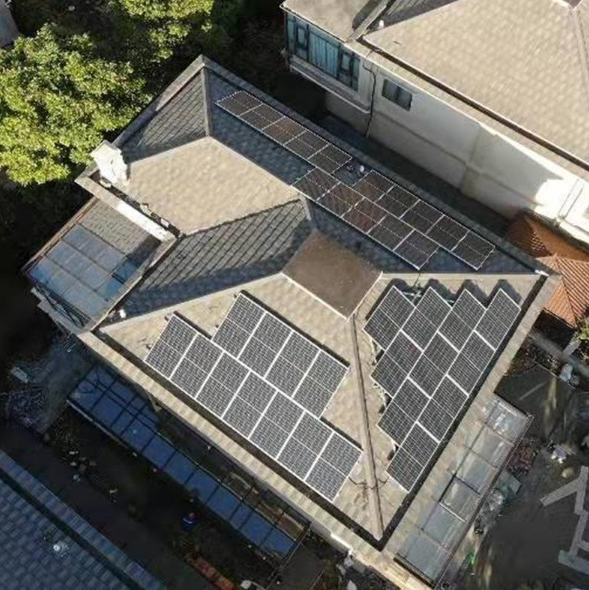
A homeowner with solar panels on the roof generates power during the day. But they are at work. The house is empty. The solar power is sent to the grid at low rates.
At night, they come home, plug in their EV, and pay high rates to charge from the grid.
This makes no sense.
With storage, the system saves the solar power generated during the day. When the homeowner plugs in at night, the EV charges from the battery – not from expensive grid power.
The result: The homeowner uses their own solar power, not the utility's. Electricity bills drop. The EV runs on sunshine.
Scenario 2: Commercial / Industrial
A factory or office building faces two problems: high electricity demand charges and peak-hour rates that are twice the off-peak rate.
Without storage, they have no choice. They pay the peak rates.
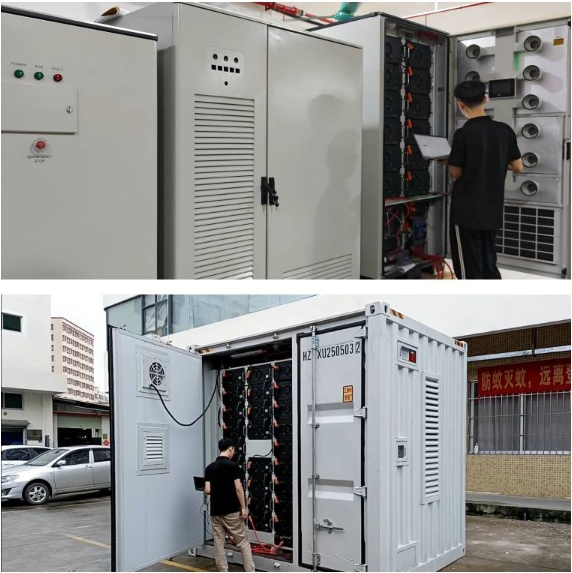
With a commercial storage system (100kW or larger), the EMS charges the battery during cheap off-peak hours – typically midnight to early morning. During peak hours, when grid power is expensive, the system discharges the battery to run the facility and charge employee EVs.
The result: Peak demand charges are reduced. The building avoids expensive grid power during the day. And employees arrive to find EV chargers ready to use.
Scenario 3: Microgrid / Off-Grid
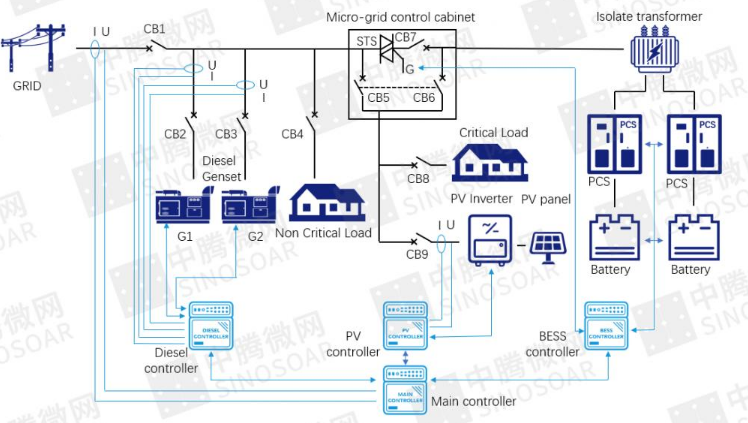
Remote sites – island resorts, mining camps, rural communities – often rely on diesel generators. Diesel is expensive. Diesel is dirty. And when the generator breaks, there is no backup.
A solar + storage + charging microgrid changes this. Solar panels generate power during the day. Storage banks keep the excess. At night or on cloudy days, the battery supplies the load. Diesel becomes backup, not primary.
For EV charging, the same system works. Visitors or residents can charge their EVs from solar power, not from diesel.
The result: Fuel costs drop. Reliability goes up. And the site runs on renewable energy, not delivered fuel.
Why This Matters for Buyers
If you are buying only charging piles, you are competing with every other distributor who can import boxes from China.
If you are buying an integrated system – solar, storage, and charging – you are offering something most competitors cannot.
For project developers: One vendor, one warranty, one support contact. Not three separate suppliers who blame each other when something goes wrong.
For facility owners: A system that pays for itself through energy savings, not just a charger that sits unused.
For distributors: A differentiated product line. While others sell the same white-label chargers, you offer a complete solution.
What We Actually Ship
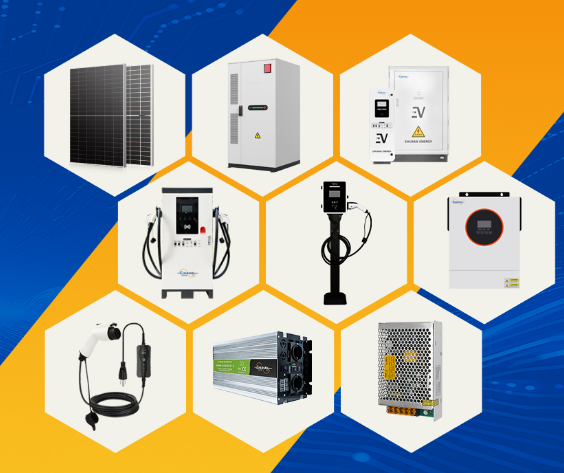
Here is what a typical integrated system includes:
Solar Inverter (3kW to 110kW)
IP66 rated for outdoor installation
45°C full power operation – no derating in tropical heat
Multiple MPPT trackers for shaded or multi-orientation arrays
Energy Storage (5kWh to 200kWh+)
Lithium iron phosphate (LFP) cells – safer than NMC
Modular design – start small, expand later
Built-in BMS with cell balancing and thermal management
Charging Pile (7kW to 240kW)
AC home chargers or DC fast chargers depending on application
OCPP-compliant for remote management
RFID, app, or plug-and-charge options
EMS Controller
Real-time monitoring of solar, storage, grid, and chargers
Automated decision-making based on time-of-use rates
Remote access via web or mobile app
All of this can be packaged into a single cabinet for commercial installations, or installed separately for residential projects.
Where We Have Done This
We are not new to integration. Our team has been designing DC-side systems for 15 years. The same engineering that goes into our individual products goes into our integrated systems.
Recent projects include:
Commercial microgrid for a manufacturing facility (100kW storage + 60kW charging)
Residential solar + storage + EV charger package for villa communities
Rural charging station with solar canopy and battery backup
For client privacy, we do not share specific locations without permission. But we can provide case studies under NDA.
A Note on Certification
Our individual products carry CCC, CB, TUV, and SAA certifications. For integrated systems, the certification requirements vary by market. We work with local partners to ensure compliance.
If you need a system certified for your country, contact us early. We can plan the testing and documentation into the project timeline.
Getting Started
An integrated system is not a standard product you order off a shelf. It requires engineering: load calculation, solar sizing, storage capacity planning, and charging demand forecasting.
We do this work before you place an order.
Here is how it works:
1.You share your site details – location, load profile, solar potential, EV charging needs
2.We design a system – inverter size, storage capacity, charger type and quantity
3.You review the proposal – equipment list, installation diagram, energy savings estimate
4.We manufacture and ship – all three components, tested together
5.Local installation – we support your local electrician or installer with remote guidance
We can also recommend local installation partners in some markets. Ask us about your region.
The Bottom Line
Charging piles alone are a commodity. Integrated systems are a solution.
Wenzhou Chuhan makes all three products – and designs them to work as one. If you are looking for a supplier who can do more than ship boxes, we should talk.


