A hybrid quote often closes with a confident line: "this 7.2 kW unit will back up the house." The buyer hears whole-house. The installer later opens a panel and finds a kettle, an oven, a well pump, and a driveway charger all assumed to ride through a grid drop. The hybrid may have an EPS or backup output, but nobody wrote down which circuits actually land on that output. The first question is not how impressive the AC nameplate looks. It is which loads must stay on, and whether those loads fit the backup path of the model you are about to sell.
Backup is a circuit list, not a slogan
On the quoting sheet, list the essential circuits before you circle a model. Lights, refrigeration, a network rack, a medical device, or a small office can be a short, honest list. A cooker, an air conditioner, and an EV charger on the same "backup" line is a different job. If the list is still a slogan - "whole house" with no breaker names and no watts - do not lock the SKU.
This is a stocking issue as well as a design issue. A distributor who holds a popular 7 kW-class single-phase hybrid, and who has never asked what the backup port is expected to carry, will win simple lighting-and-fridge jobs and then stall when the next villa wants the kitchen and the wallbox to stay alive. Changing the inverter late can also change the battery current and the enclosure plan.
The AC nameplate is not automatically the backup rating
The figure printed as rated AC output is the unit's grid-side class. It is not, by itself, a promise that every load on the main board will be supported during a grid failure. Unless the datasheet for that exact model states that the backup or EPS path carries the full nameplate, treat backup capacity as a number you must confirm, not a number you infer.
CHUHAN's public ACT EUA7200-48 is a useful example of why the two ideas must stay separate. It is a 7.2 kW, 48 V, 220/230 V single-phase hybrid with dual MPPT, up to 10.5 kW of PV input, an EPS backup output, and a generator input. Those are distinct lines on the quote. "7.2 kW hybrid" does not tell you which circuits go to the EPS output, and "generator input" does not replace a battery plan. If you intend to parallel units - this model can be paralleled up to six - you are still in the same single-phase, 48 V family. Parallel operation is not a shortcut around a missing circuit list, and it is not a three-phase board.
If the next enquiry is a 10.2 kW or 12 kW class unit, do not assume it inherited the same backup arrangement. Read that model's own backup or second-output description.
A second AC output and an EPS port are not interchangeable labels
Some hybrids describe a second AC output intended for a critical-load panel. CHUHAN's public ACT-VX-10K is a 10.2 kW single-phase hybrid presented that way: a main AC output plus a second AC output for essential circuits. That is a different quoting sentence from "EPS backup" on another model. Do not copy the wiring story from one datasheet onto the other.
Ask, in plain language: does the site need a dedicated essential-load board, or is the buyer expecting the whole main board to stay alive? The answer changes both the inverter family and the on-site wiring, even when the kilowatt class looks similar.
Storage and any EV charger must sit on the same circuit list
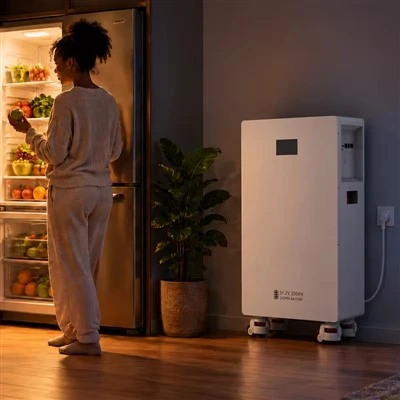
The battery has to support the backup you just promised, and it has to be in the same voltage family as the hybrid. A 5.12 kWh wall-mounted LiFePO4 pack (51.2 V, 100 Ah), a 10 kWh floor-standing tower (51.2 V, 200 Ah), or a 16 kWh floor tower (51.2 V, 314 Ah) sits naturally with the 48 V house hybrids above. A 20 kW / 50 kWh outdoor cabinet on a 512 V class bus does not.
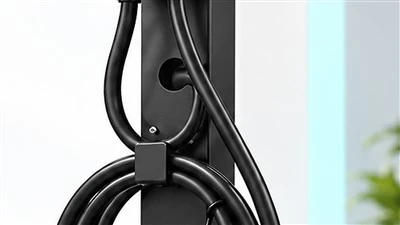
An EV charger belongs on the same list. A 7 kW single-phase wallbox that the owner wants during a grid drop is a backup load, not a footnote. A 22 kW, 32 A three-phase Type 2 wallbox, or a later DC depot charger, is a different board and should not be pasted onto a single-phase house-backup quote.
What to send with the enquiry
If you want help matching a hybrid to a real backup plan, send one message that includes:
- Voltage at the main board, and whether the supply is single-phase or three-phase
- The hybrid AC power you think you need, and whether you already have a preferred model
- The circuits that must stay on during a grid drop, with a rough wattage for each
- Battery voltage or a 51.2 V pack versus a high-voltage cabinet, if already known
- Whether an EV charger is on the same project, and its power class
- Quantity (a stocking order or a single project) and the destination country
Wenzhou physical factory · inverters / energy storage / EV chargers · customizable.
Email: sales03@chinachuhan.com
WhatsApp: +86 189 6895 8968
Website: www.chinachuhan.com