A hybrid quote often starts with the one number the buyer said out loud: "we need 10 kW" or "send the 12 kW unit." The roof is treated as a single DC source. Weeks later the installer finds an east-west split, a porch array plus a main roof, or a carport that was "going to be added later," and the inverter that was already priced cannot land those strings cleanly. The first question is not which kilowatt class to stock. It is how many independent MPPT inputs the site actually needs, and whether the PV input of that model can take the array you intend to sell with it.
Write the array layout before the AC rating
On a quoting sheet, draw the roof (or the ground mount) before you circle a model. Count the orientations and the physically separate arrays. Each independent MPPT is a place to land a string with its own direction, shading, or cable run. Two arrays that do not share the same conditions should not be forced onto one tracker just because the AC rating "looks about right."
This is a stocking issue as much as a design issue. A distributor who holds only one 10 kW-class single-phase hybrid, and who has never checked how many MPPTs that box has, will keep winning simple south-facing houses and then stall on the first split-roof villa. The stall is expensive: the unit is already in the quote, the battery family has been chosen, and changing the inverter can change the DC current and the enclosure plan.
CHUHAN's public single-phase hybrids are a useful example of why you must read the PV side, not only the AC side. The ACT EUA7200-48 is a 7.2 kW, 48 V, 220/230 V hybrid with dual MPPT and up to 10.5 kW of PV input. That is not a generic "7 kW inverter." It is a specific pairing: two trackers, and more PV watts than the AC nameplate. If your next enquiry is a 10.2 kW or 12 kW class unit, do not assume it inherited the same MPPT count or the same PV headroom. Read that model's inputs.
PV input headroom is a second number, not a footnote
Installers routinely plan arrays larger than the inverter's AC output. That only works if the model you are selling actually allows it. On the EUA7200-48, the public figure is 7.2 kW AC with up to 10.5 kW PV. On the 12 kW single-phase hybrid in the 6/8/10/12 kW IP65 series, and on the ACT-VX-10K 10.2 kW single-phase hybrid, the PV window has to be taken from that unit's own datasheet. "It is a 10 kW hybrid, so a 12 kW array will be fine" is not a specification.
Put both numbers on page one of the quote:
- AC output the board must accept (and whether the house is single-phase or the workshop is three-phase)
- Allowed PV input, and the number of independent MPPT inputs you are counting on
If either number is still unknown, do not lock the SKU. Ask for the array layout and come back with a model that fits it.
Phase comes next, not first
Once the DC layout is honest, choose the AC family. For a 230 V single-phase house, the public 48 V hybrids - the EUA7200-48, the ACT-VX-10K with its second AC output for a critical-load panel, or the 12 kW unit in the IP65 single-phase series - stay in the low-voltage house family. For a 230/400 V or 380/400 V three-phase board, look at the ACT TPLV-D12000 (12 kW, 40–60 V battery window, charge and discharge current up to 250 A) or the ACT-TP-LVA15000 (15 kW, 48 V battery, up to 280 A). Those current figures belong with a 48 V-class battery, not with a 512 V cabinet.
A split-roof villa can still be a single-phase, 48 V job if the MPPT layout fits. A clean south roof on a workshop can still be a three-phase job because of the board, not because the roof is complicated. Do not use "we need more MPPTs" as a reason to jump from a house hybrid to a commercial high-voltage cabinet, or the other way around.
Storage and the charger inherit the same drawing
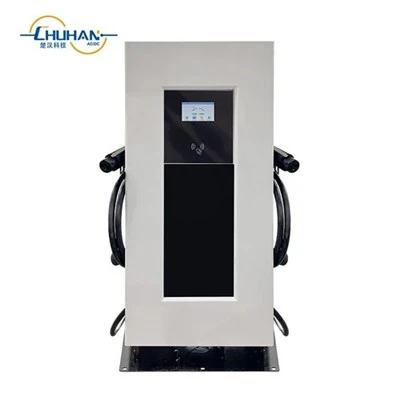
The battery and any EV charger have to live on the same plan. A 5.12 kWh wall-mounted LiFePO4 pack (51.2 V, 100 Ah) or a 16 kWh floor tower (51.2 V, 314 Ah) sits naturally with the 48 V hybrids above. The 20 kW / 50 kWh outdoor cabinet, listed at a 512 V class bus, does not. If the enquiry already wants a 22 kW, 32 A three-phase Type 2 wallbox, the main board must be three-phase; that wallbox should not be pasted onto a single-phase 10.2 kW hybrid quote. A later DC depot charger is a different layout again, and it does not get solved by adding another MPPT to a house inverter.
What to send with the enquiry
If you want help matching a hybrid to a real roof, send one message that includes:
- Voltage at the main board (and single-phase or three-phase)
- Planned PV power, number of orientations, and how many physically separate arrays you need to land
- The hybrid AC power you think you need, and whether you already have a preferred model
- Battery voltage or a 51.2 V pack versus a high-voltage cabinet, if already known
- Whether an EV charger is in the same project, and its power class
- Quantity (a stocking order or a single project) and the destination country
Wenzhou physical factory · inverters / energy storage / EV chargers · customizable.
Email: sales03@chinachuhan.com
WhatsApp: +86 189 6895 8968
Website: www.chinachuhan.com