


Grid-tied vs off-grid vs hybrid inverter – which one is best for home?
When planning a solar system for your home, choosing the right inverter type is the most critical decision. The inverter is the "brain" of your system – it determines how you use solar energy, how you interact with the utility grid, and whether you still have power when the grid goes down.
Today, there are three main types of residential inverters: grid-tied inverter, off-grid inverter, and hybrid inverter. They work very differently in terms of operation, cost, reliability, and ideal home scenarios.
In this article, we will compare grid-tied vs off-grid vs hybrid inverter in detail – from functionality, upfront cost, long-term savings, to real-life use cases. By the end, you'll clearly know which one is best for home – whether you want to save on electricity bills, achieve energy independence, or have backup power for peace of mind.
1. The core difference (simple analogy)
Grid-tied inverter – Like an obedient employee. It only works when the grid is present. When the grid fails, it shuts down immediately (safety requirement). It cannot charge batteries or power your home during a blackout.
Off-grid inverter – Like a self-sufficient loner. It does not connect to the grid at all. It must work with a battery bank, drawing power from solar or batteries to run your home independently.
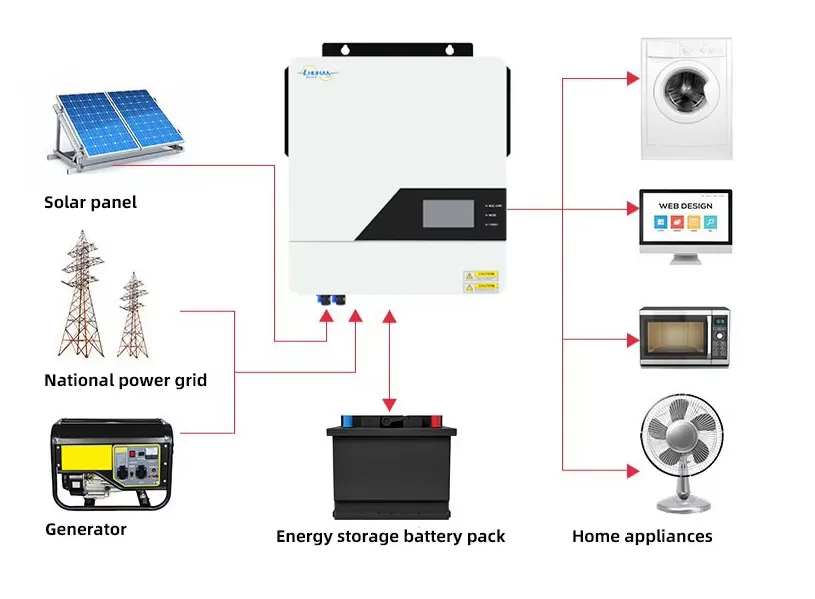
Hybrid inverter – Like a smart manager. It can do everything: grid-tied, off-grid, and battery management. When the grid is normal, it can sell excess power. When the grid fails, it automatically switches to battery power.
2. Grid-tied inverter – explained
How it works: Converts DC power from solar panels into AC power for home use or export to the grid. It must synchronize with the grid. If grid power is lost, the inverter immediately stops (anti-islanding protection).
Pros:
✅ Lowest cost among the three
✅ Highest efficiency (95-98%) – no battery losses
✅ Can sell excess power to the grid via net metering
Cons:
❌ No power during grid outage (even in full sun)
❌ Cannot connect a battery – no energy storage for nighttime
❌ Fully dependent on grid stability
Best for: Homes with very stable grid, rare outages, and good net metering policies. You only want to reduce your bill, not backup power.

3. Off-grid inverter – explained
How it works: Must be paired with a battery bank. It draws power from batteries, and can charge the batteries using solar. It has no connection to the utility grid – creating a completely independent microgrid.
Pros:
✅ Complete independence – no grid, no outages
✅ Ideal for remote areas (mountains, islands, farms) with no grid access
✅ Simple system – no grid approval paperwork
Cons:
❌ High cost – needs a large battery bank (lithium or lead-carbon)
❌ Limited battery life (5-10 years) – replacement required
❌ Risk of running out of power during consecutive cloudy days (needs a backup generator)
❌ Cannot sell excess power – extra solar energy is wasted
Best for: Homes with zero grid access, or those willing to pay a premium for total energy independence.

4. Hybrid inverter – explained
How it works: A 3-in-1 device: grid-tied inverter + off-grid inverter + battery charger. It can:
Power home loads with solar first
Charge batteries with surplus solar
Sell excess to grid after batteries are full
Automatically switch to off-grid mode (battery power) when the grid fails
Pros:
✅ Most flexible – handles grid outages, time-of-use rates, and maximizes self-consumption
✅ Expandable – start with inverter + small battery, add more later
✅ Most hybrid inverters offer a "backup" terminal for critical loads (fridge, lights, router)
✅ Maximizes solar utilization and reduces electricity bills
Cons:
❌ Higher upfront cost than a pure grid-tied inverter (but lower than a full off-grid system of same capacity)
❌ Slightly more complex installation, needs professional setup
❌ Batteries remain the major cost
Best for: The majority of modern homes – especially those with occasional outages, time-of-use electricity pricing, or a future plan to add storage.
5. Quick comparison table: Grid-tied vs off-grid vs hybrid inverter
| Feature | Grid-tied | Off-grid | Hybrid |
|---|---|---|---|
| Battery required? | No | Yes (mandatory) | Optional (recommended) |
| Works during grid outage? | No | Yes (from battery) | Yes (from battery) |
| Can sell to grid? | Yes | No | Yes |
| Upfront cost per kW | Low | High | Medium |
| Long-term bill savings | Medium | None (no bill) | High |
| Installation complexity | Low | High | Medium |
| Typical lifespan | 10-15 yrs | Inverter 10y + battery 5-10y | Inverter 10y + battery 5-10y |
6. So, which one is best for home?
There is no single answer, but here is a clear recommendation based on your situation:
| Your home scenario | Best choice |
|---|---|
| Very stable grid, rare outages, tight budget, just want to save money | Grid-tied inverter |
| No grid access at all, or you want complete energy independence | Off-grid inverter |
| Occasional outages, time-of-use rates, want backup power | Hybrid inverter |
| Already have grid-tied, want to add battery later | You need to replace with hybrid inverter or add AC-coupled storage |
| New solar system, budget allows, want future-proof solution | Hybrid inverter (you can start without a battery and add later) |
Looking at global trends in 2026, hybrid inverters are becoming the mainstream choice for homes. Why? Rising electricity prices, more frequent weather-related outages, and falling lithium battery costs. A hybrid inverter lets you enjoy grid-tied economics today, and add battery independence tomorrow.
7. Real-life examples
Example 1 (Grid-tied) – Mr. Zhang in Shanghai. Very stable grid, good net metering. He installed a 10kW grid-tied inverter, no battery. His annual solar income is ~$830. Payback period ~4 years.
Example 2 (Hybrid) – Ms. Li in Changsha. Occasional thunderstorms cause short outages. She installed a ChuHan Technology 8kW hybrid inverter + 10kWh LiFePO4 battery. Using time-of-use rates, she charges the battery at night, saving 50% on her bill. During an outage, her fridge and lights run for 12 hours. She paid an extra $2,500 but feels it's worth it.
Example 3 (Off-grid) – Mr. Wang owns a farm-stay in a remote mountain area with no grid. He installed a 15kW off-grid inverter + 40kWh battery + backup diesel generator. High upfront cost, but still cheaper than extending the grid ($110,000+).
8. Frequently Asked Questions (FAQ)
Q1: I already have a grid-tied inverter. Can I add a battery to go off-grid?
A: Most grid-tied inverters do not support direct battery connection. You would need to replace it with a hybrid inverter, or add an AC-coupled storage converter.
Q2: Can a hybrid inverter power all my appliances during an outage?
A: It depends on battery power and capacity. We recommend connecting only critical loads (fridge, lights, router, outlets) to the backup terminal. Large loads like AC or heaters require a much larger battery.
Q3: How long do these inverters last?
A: The inverter itself typically lasts 10-12 years. Grid-tied may last longer (no daily battery cycling). For off-grid and hybrid, the battery portion usually needs replacement every 5-10 years depending on usage.
Q4: Which type saves the most money in the long run?
A: Upfront, grid-tied saves the most. However, if your area has time-of-use rates and frequent outages, a hybrid inverter often saves more long-term – because it avoids outage losses (spoiled food, business interruption, etc.).
Q5: Does ChuHan Technology manufacture these inverters?
A: Yes – ChuHan Technology specializes in hybrid inverters and off-grid inverters, especially for residential and small commercial storage systems. For specific models and a free quotation, contact our engineers.
Final thoughts
Choosing between grid-tied vs off-grid vs hybrid inverter is not about good or bad – it's about what fits your home. Ask yourself three questions:
How reliable is your local grid? (Number of outages per year?)
What are your electricity rates? (Time-of-use? Net metering?)
What is your budget? Are you willing to replace batteries in 5-10 years?
With these answers, you'll know exactly which one is best for home. If you are still unsure, the ChuHan Technology team can provide a free customized comparison report based on your utility bill and usage pattern.
👉 Want a free inverter selection plan?
Contact ChuHan Technology engineers now → WeChat/whatsapp:+86 189 6895 8968 email: sales03@chinachuhan.com


