

Key Fact: No failure-only predictable efficiency loss, fully mitigated by proper design
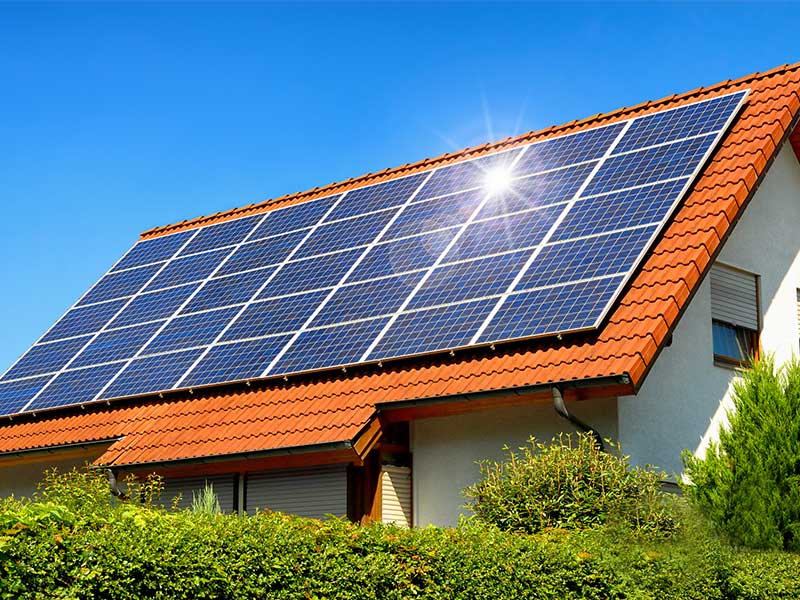
As global temperatures rise year by year, many people worry whether solar panels will stop working in hot weather. This concern is unnecessary because ChuHan's solar panels continue to operate even under extreme high temperatures. Our company's modern design ensures that our products function reliably in most conditions.
| Panel Type | Temperature Coefficient (per °C) |
| ChuHan N-type Monocrystalline | -0.30% |
| Standard Polycrystalline | -0.40% to -0.50% |
| Thin Film (Amorphous Silicon) | -0.20% to -0.32% |
| Heterojunction (HJT) | -0.24% to -0.30% |
1.Basic Working Principle of Solar Photovoltaic Panels
Before we begin today's topic, you might wonder how solar panels convert sunlight into electricity. The answer is the photovoltaic effect. Each solar panel consists of many cells that work together to generate current when sunlight hits them. This way, you get clean energy from the sun-with no moving parts and no noise. For maximum efficiency, install solar panels in areas with the most sunlight, such as rooftops or open ground.
Tip: Keeping solar panels clean and unobstructed improves energy output efficiency.
1. System Types
The three main types of solar power systems are:
- Grid-Tied Systems: These connect to the local grid. Solar power is used during the day, and grid power is switched to at night. Many companies prefer this solution for its simplicity and cost-effectiveness.
- Off-Grid Systems: These operate without grid connection and require batteries to store energy. Suitable for remote areas or regions with unstable power.
- Hybrid Systems: These combine both approaches, using solar power, batteries, and the grid. This provides backup power and allows excess energy to be utilized.
| System Type | Grid Required? | Battery Used? | Suitable Locations |
|---|---|---|---|
| Grid-Tied | Yes | No | Urban businesses, etc. |
| Off-Grid | No | Yes | Areas with unstable power, etc. |
| Hybrid | Yes/No | Yes | Critical infrastructure, etc. |
2. Key Components of Solar Power Systems
To build a robust solar system for your business, you need the following components:
- Solar Panels: Collect sunlight and generate electricity.
- Photovoltaic Inverters: Convert DC power to AC power for use in buildings.
- Mounting Systems: Include aluminum brackets, connectors, and other installation equipment to secure panels firmly, even in harsh weather.
- Energy Storage Batteries (Optional): Store excess energy for later use.
2. Do Solar Panels Fail in High-Temperature Weather?
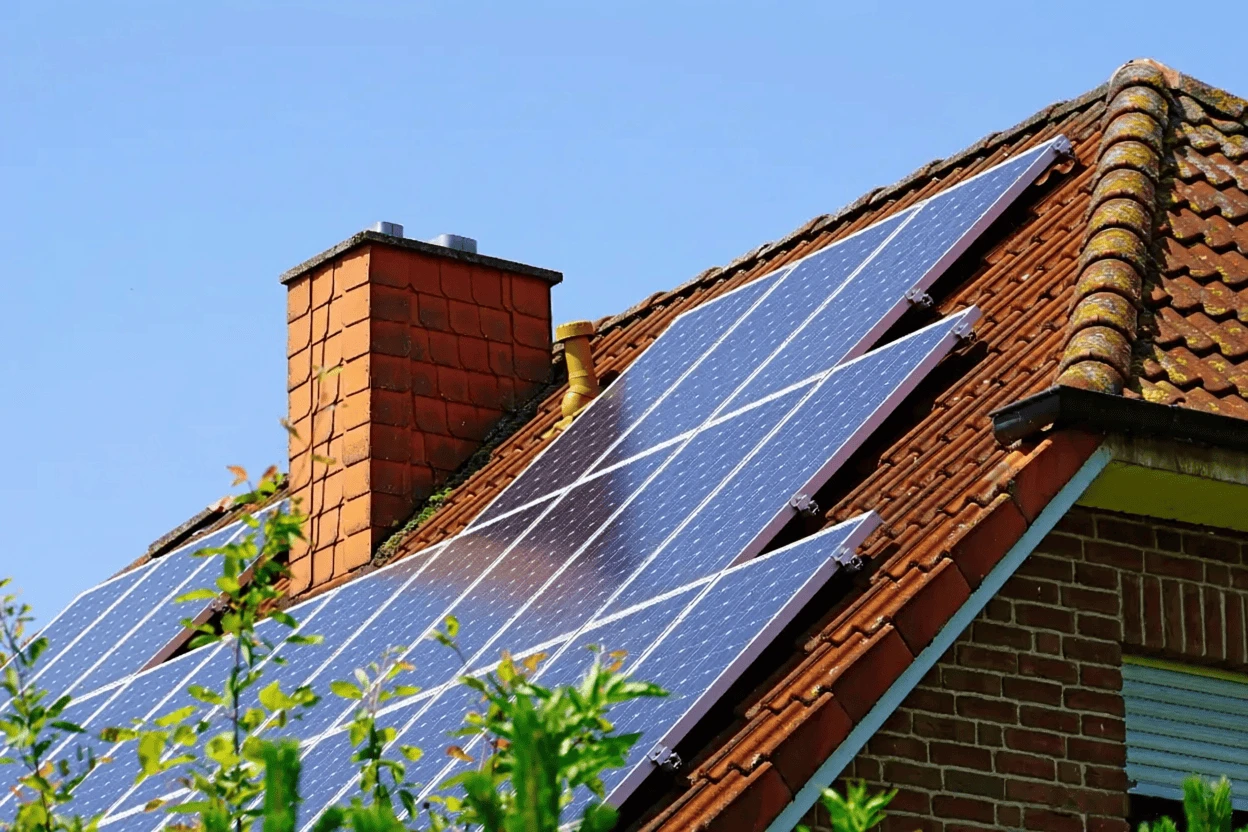
When considering whether solar panels fail in hot weather, I rely on actual data and field test results. ChuHan's solar photovoltaic panels do not fail in extreme heat-they continue generating power, though output may decrease slightly.
For example, at 50°C, most panels still operate at around 90% of their rated output. Even during heatwaves, efficiency drops do not mean complete failure. This ensures stable performance for commercial users under harsh conditions.
As Professor Alastair Buckley of the University of Sheffield explains, "It's not a big deal. High temperatures have a minor impact on overall solar output-this is secondary. If it's sunny and hot, you still get good generation. Output doesn't plummet."
1. Detailed Causes of Efficiency Loss
Efficiency loss due to high temperatures is unavoidable. For instance, if the temperature rises from 25°C to 60°C, a panel with a temperature coefficient of -0.30%/°C will lose approximately 10.5% of its output power. Efficiency typically drops by 0.3% to 0.5% per degree Celsius. Different technologies (e.g., PERC, TOPCon, IBC, HJT) also vary in high-temperature efficiency loss. Overall, power output may decline by 10–15% in hot weather.
Beyond high temperatures, solar panel efficiency loss is also affected by:
- Spectral Mismatch Loss: Sunlight contains photons of varying wavelengths, but not all can be converted to electricity. Due to semiconductor material (e.g., silicon) bandgap limitations, only photons with energy above the bandgap can excite electrons; low-energy photons (e.g., infrared) pass through, while high-energy photons (e.g., ultraviolet) lose excess energy as heat.
- Surface Optical Loss: When sunlight hits the panel surface, some light is reflected by the glass, and some is blocked by front metal grid electrodes. Although modern panels use anti-reflective coatings (AR coating) and fine grid designs, physical obstruction and reflection still cause ~5% initial light loss.
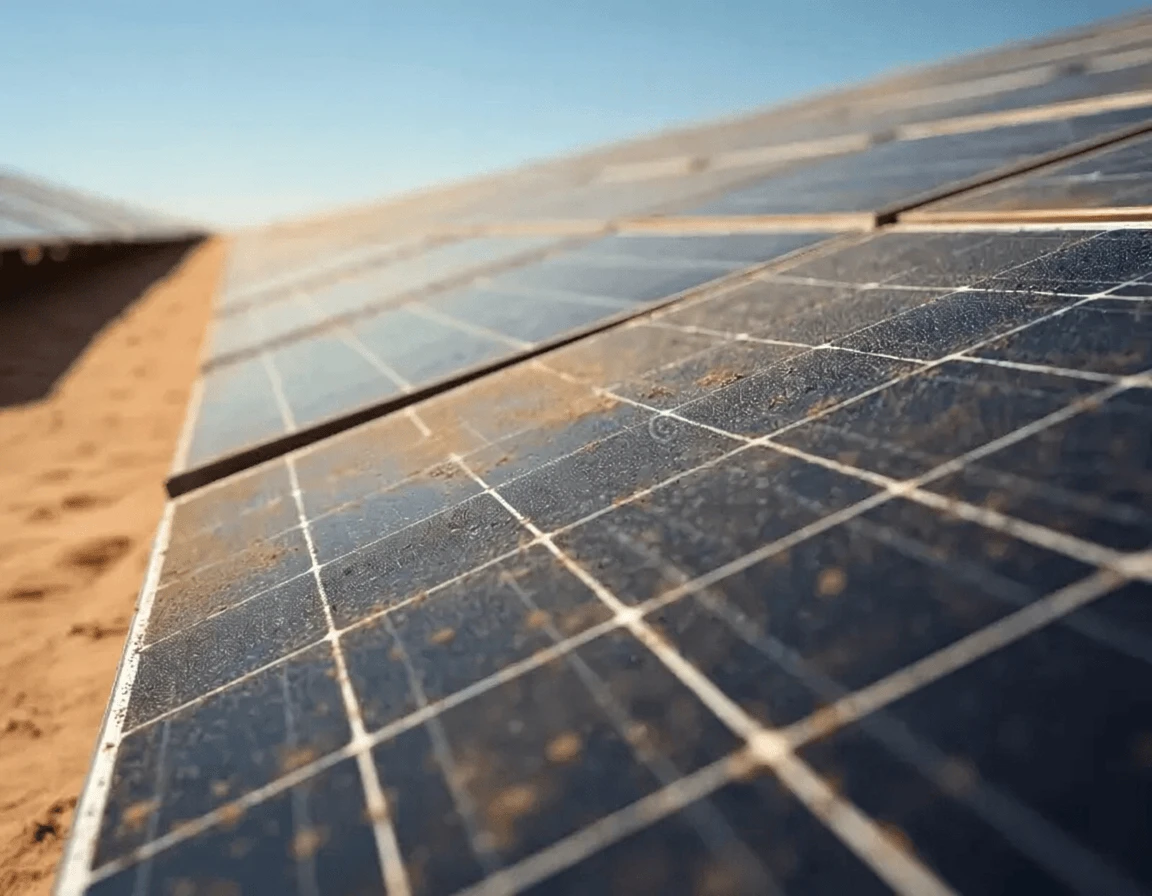
- Dust and Dirt Obstruction: Dust is the "silent killer" of solar generation. Accumulated dust, bird droppings, or pollen directly block sunlight, reduce transmittance, and increase thermal resistance. In arid or dusty regions, long-term neglect can cause 5% to 20% or higher generation loss.
- Shading and Module Mismatch: Even minor shading (e.g., from leaves, chimneys, or adjacent buildings) severely impacts performance. In traditional series circuits, the weakest module limits the entire string's current output, causing a significant "bucket effect."
- Internal Recombination and Resistive Losses: During photoconversion, some excited electrons recombine with holes before reaching electrodes (recombination loss), failing to form useful current. Additionally, bulk resistance in cells and contact resistance in wiring/soldering dissipate energy as heat during transmission.
- Long-Term Aging and Degradation: Components naturally age over time. For example, encapsulant (EVA) may yellow under prolonged UV exposure, reducing transmittance; thermal stress from daily temperature swings can cause micro-cracks in cells, leading to gradual power decline.
2. Temperature Limits and Durability
| Feature | Description |
|---|---|
| Panel Technology | N-type and P-type half-cut panels enable effective heat dissipation. |
| Temperature Coefficient | N-type series power loss as low as -0.30%/°C, ensuring better power retention in heat. |
| Materials | High-quality monocrystalline silicon and dual-glass structures enhance thermal performance. |
| Anti-PID Function | Prevents heat-induced performance degradation, ensuring long-term reliability. |
| Design Features | High-durability glass and anti-reflective coatings improve heat dissipation. |
Solar panel manufacturers typically test panels using thermal cycling, damp-heat, and dual 85 tests (85°C and 85% humidity for 1,000 hours), ensuring normal operation under the harshest conditions. Solar Energy UK confirms that solar panels' normal operating temperature range is typically -40°C to +85°C. Performance declines by 0.2% to 0.5% per degree above 25°C, but high temperatures often coincide with stronger sunlight and longer daylight hours.
3. Heat Dissipation
Different panel types vary in heat dissipation capability:
| Panel Type | Temperature Coefficient (°C) | Efficiency Loss at 87°F (~30.6°C) |
|---|---|---|
| N-type Monocrystalline | -0.30% | ~1.7% |
| P-type Half-Cut | -0.34% | ~1.9% |
| Standard Polycrystalline | -0.40% to -0.50% | 2.2% to 2.8% |
| Bifacial Modules | -0.30% to -0.34% | ~1.7% to 1.9% |
| Dual-Glass Modules | -0.30% | ~1.7% |
4. Tips to Reduce Temperature Impact
For commercial projects, the following steps are recommended to minimize temperature-related efficiency loss:
(1) Choose panels with low temperature coefficients, such as ChuHan's PLM-585DH8N-144 or PLM-720DH2N-132 series.
(2) Install panels with gaps above roofs or use tilted mounts to improve airflow.
(3) Clean panels regularly to remove dust and debris.
(4) Schedule quarterly inspections, especially in dusty or hot regions.
(5) Manage vegetation to prevent shading and overheating.
(6) Mount panels 4–8 inches above roofs, which can lower temperatures by up to 10°C and potentially increase generation by 2–5%.
FAQ
Q: How do ChuHan solar panels handle extreme high temperatures in commercial installations?
A: I've observed that ChuHan's watt solar panels maintain strong output power in high heat. Their design provides reliable performance guarantees for large-scale projects.
Q: Does high temperature shorten the lifespan of solar panels?
A: I have not observed shortened lifespans with ChuHan solar panels. Advanced materials and anti-PID functions protect panels from heat damage.
Q: How to maximize efficiency in hot climates?
A: I recommend using ChuHan solar panels with proper mounting for airflow. Regular cleaning and inspections help maintain optimal performance for commercial systems.
Final Thoughts
ChuHan Technology confronts high-temperature challenges with innovative tech-our solar panels deliver stable performance even in heat, providing lasting and reliable clean energy solutions for your commercial projects. Whether on factory rooftops or desert power stations, ChuHan products undergo rigorous testing to ensure efficient power generation even in extreme weather. Choose ChuHan, choose a trusted partner that stands strong in the heat. Contact us now to start your green energy journey!
→ whatsapp: +86 173 6959 1971
Email: sales07@chinachuhan.com


