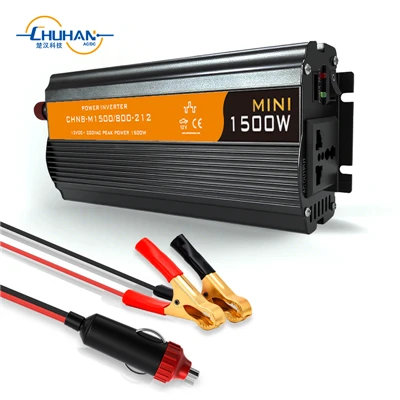
As the core of power conversion in electronic and electrical systems, the operating status of switching power supplies directly affects the reliability and lifespan of the entire system. Due to the high-frequency switching, power loss, and thermal cycling within switching power supplies, long-term operation can lead to component aging, increased contact resistance, decreased insulation performance, and weakened heat dissipation. Therefore, it is essential to conduct targeted inspections, cleaning, and maintenance according to a scientifically established maintenance cycle to prevent sudden failures and maintain optimal performance.

The determination of the maintenance cycle should comprehensively consider factors such as the equipment's operating environment, load characteristics, operating time, and frequency of use. Under normal indoor conditions, with stable loads and an average annual operating time not exceeding 3000 hours, a basic maintenance cycle of six months is recommended for routine inspections and basic maintenance. However, for harsh environments such as high temperature, high humidity, dust, corrosive gases, or strong electromagnetic interference, as well as for industrial equipment or communication base station power supplies that operate continuously at full load throughout the year, the maintenance cycle should be shortened to three months or even less to ensure that potential problems are detected and addressed promptly. For equipment used intermittently, maintenance can be calculated based on cumulative operating hours, generally every 500-1000 operating hours.
Routine inspections can be considered the first line of defense for maintenance. They should be performed after each significant load change or after thunderstorms. Focus on checking the casing and vents for abnormal heating, unusual noises, or a burning smell. Confirm that indicator lights and displays are functioning normally, and check that input and output voltages are within the rated range. A simple cleaning should be performed monthly to remove dust from the casing surface and ventilation holes to prevent heat dissipation obstruction and excessive temperature rise.
Quarterly or semi-annual maintenance requires a thorough examination of critical internal components. After disconnecting and testing for voltage, disassemble the casing to inspect power devices, transformers, and inductors for discoloration, bulging, or burning marks. Clean internal dust, especially from the PCB board, heat sink fins, and fan blades. If necessary, use an anti-static vacuum cleaner or a non-woven cloth with a suitable amount of isopropyl alcohol to wipe the surfaces, avoiding contaminants that could cause insulation degradation or localized leakage. Check the tightness of all electrical connections, terminal blocks, and plugs/sockets. If any looseness is found, tighten them immediately to the rated torque to prevent increased contact resistance and overheating. Lubricate or replace fan bearings to ensure their speed and airflow meet heat dissipation requirements. Test the reliability of protection devices (overvoltage, overcurrent, overheat, short circuit) and calibrate parameters if necessary.
Annual maintenance should include more comprehensive functional testing and performance evaluation. Measure input and output voltage, current, and ripple factor to verify that voltage regulation accuracy and load regulation meet technical specifications. Check the integrity of EMI filter components, fuses, and varistors, and evaluate insulation withstand voltage performance. Randomly check the capacitance and equivalent series resistance (ESR) of components using electrolytic capacitors; replace capacitors if capacitance decay exceeds 20% or ESR increases significantly to prevent starting difficulties or unstable output. For power supplies with potted or sealed structures, inspect the encapsulation for cracks or peeling; repair or replace as necessary.
Maintenance cycles for equipment that will be out of service for extended periods need to be set separately. Switching power supplies that have been out of service for more than three months should be thoroughly cleaned and subjected to a comprehensive inspection before shutdown. After discharging the output capacitors, they should be stored in a dry, well-ventilated environment free of corrosive gases. Every one to two months, they should be powered on and run under no-load for 10-15 minutes to prevent electrolytic capacitors from drying out and magnetic components from becoming damp. Before restarting, each item must be checked according to the quarterly maintenance procedure to ensure all functions are normal before operation.
Maintenance work should be performed by qualified technicians, and maintenance records should be compiled according to the equipment manufacturer's maintenance manual and industry standards. These records should include inspection dates, items, results, replaced parts, and test data, creating a traceable archive to provide a basis for subsequent condition assessments and lifespan predictions.
In general, the maintenance cycle for switching power supplies is not fixed but should be dynamically adjusted based on environmental severity, load conditions, and cumulative operating time. Through systematic and periodic maintenance, not only can equipment lifespan be extended and failure rates reduced, but power supply continuity and system security can also be ensured in critical application scenarios, providing a solid guarantee for the stable operation of electronic and electrical systems.